
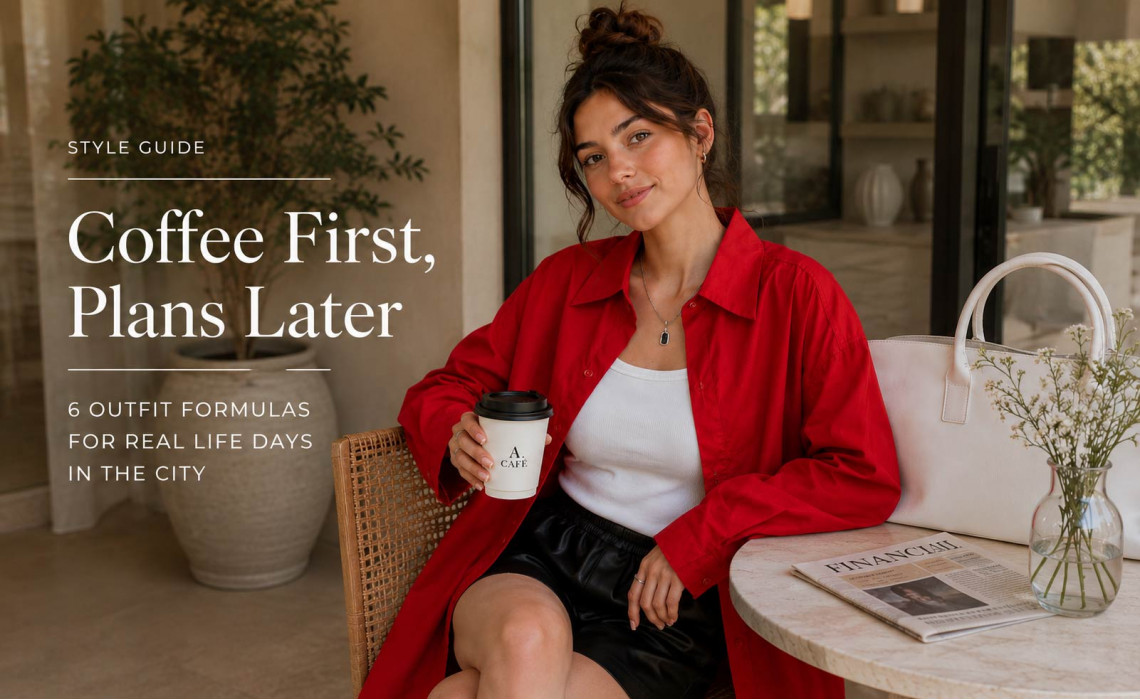
The Coffee Run Outfit Formula
STYLE GUIDE
A repeatable outfit system for coffee, errands, lunch, and everything that happens next.
The best coffee run outfit is not built for twenty minutes at a café. This guide explains how to use reliable bases, intentional proportions, and practical accessories to dress for a morning that may continue into errands, shopping, lunch, a casual meeting, or several hours in the city.
Made for mornings that turn into plans.
A coffee run sounds like a small plan. In real life, it is often the first stop rather than the whole day. Coffee becomes errands, a few shops, lunch with a friend, a casual appointment, or several unplanned hours walking around the city.
That changes the question behind getting dressed. The most useful coffee run outfit is not necessarily the most styled outfit or the most casual one. It is a starting point that feels natural at the café and still makes sense if the day keeps moving. For an everyday wardrobe built around real plans, the goal is versatility without overthinking it.
Why the Best Coffee Run Outfit Depends on What Comes Next
The phrase “coffee run outfit” can describe very different days. A quick coffee before going home prioritizes speed and simplicity. Coffee followed by errands requires movement, comfortable shoes, and enough carrying capacity for the practical parts of the day.
If lunch is likely, the outfit needs a little more visual intention so it can move into a social setting without feeling unfinished. A shopping day puts more emphasis on comfort over several hours. A casual meeting or appointment may call for a cleaner silhouette or one defined element, while a completely open day benefits most from flexibility.
This is why the first question is less useful when it is simply, “What looks cute for coffee?” A better question is, “What does the rest of my day require?” The answer helps narrow the formula before individual pieces enter the decision.
The Everyday Plans category is a useful starting point for this kind of dressing: outfits built around ordinary days that can develop into more than one stop.
Build a Formula, Not a Perfect Outfit
An outfit formula is a repeatable relationship between pieces, not a rigid uniform. It gives you a familiar structure that can be adjusted according to weather, walking time, destination, and mood.
- Textured dress + simple accessories
- Oversized shirt + a fitted or visually simple bottom
- Fitted top + relaxed bottom
- Coordinated set + practical accessories
- Feminine skort + simple top
- Relaxed matching set + one polished accessory
The value of a formula is speed. Once the relationship between the pieces works, the outfit can change through footwear, bag choice, jewelry, sleeve styling, layering, or small proportion adjustments. You are not rebuilding the outfit every morning; you are adapting a reliable structure to the day ahead.
Six Coffee Run Formulas for Different Kinds of Days
Coffee + Lunch: The One-Piece Shortcut
When coffee is likely to become brunch or lunch, one-piece dressing removes several morning decisions at once. The formula is simple: choose a dress with enough visual interest to stand on its own, then keep the supporting pieces uncomplicated.
The Adara Embroidered Textured Mini Dress demonstrates why this works. Texture and embroidery create dimension without requiring several layers or competing accessories. The broader principle applies whenever a dress already has visible surface detail: allow that detail to do part of the styling work.
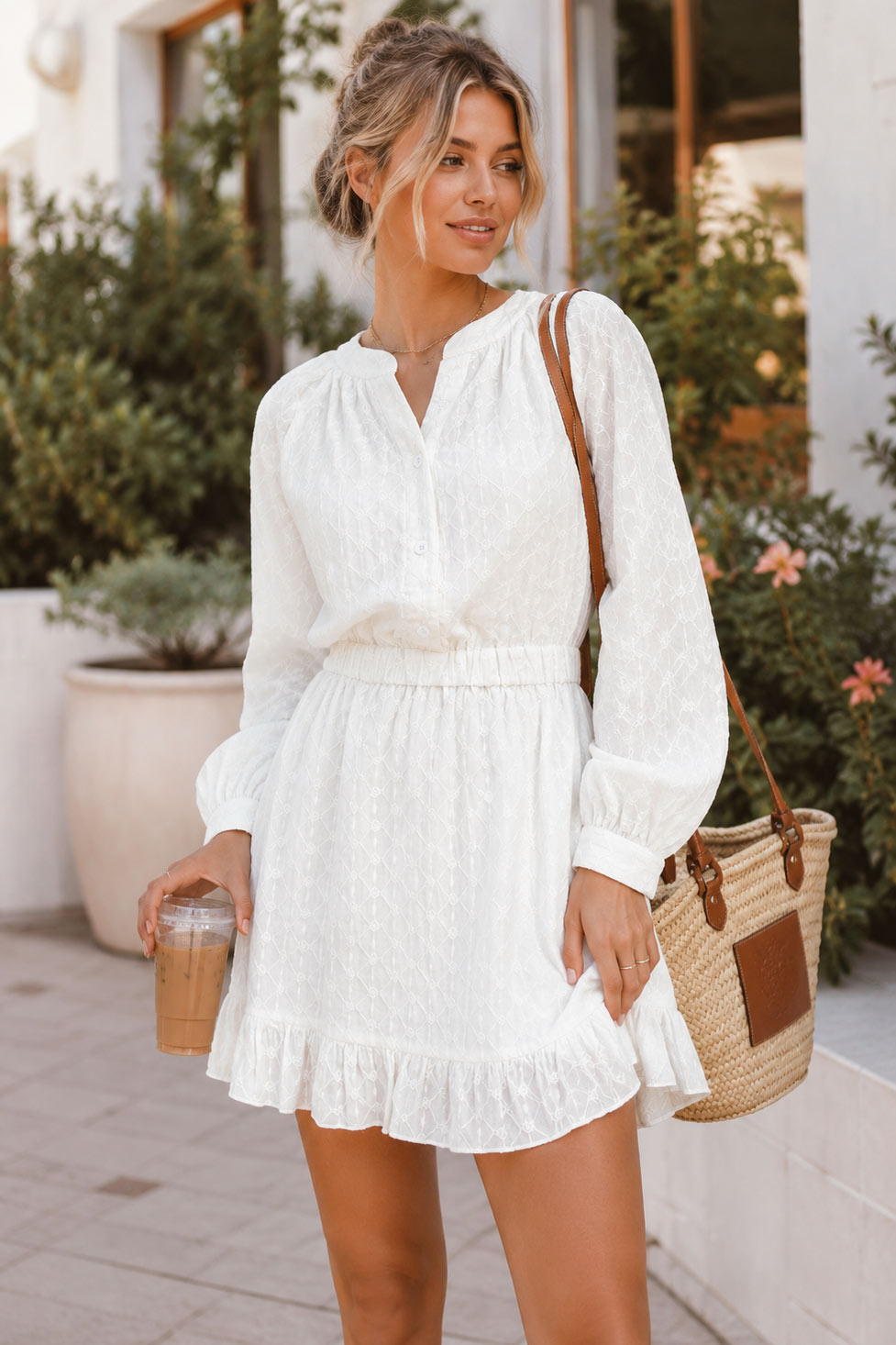
For a quick coffee, practical flats, sneakers, or simple sandals can keep the dress relaxed. If lunch is part of the plan, a more refined flat, loafer, or low heel can shift the same formula toward a social setting. Accessories should support the embroidery rather than compete with it.
This formula is especially useful for coffee dates, brunch, lunch plans, and city mornings that continue into the afternoon. A one-piece base is often more practical than separates when the priority is getting dressed quickly while still looking ready for a second plan.
Coffee + Errands: Use Relaxed Proportion With Direction
An oversized shirt is useful on a movement-heavy day because it gives the body room and creates an intentionally relaxed silhouette. The styling challenge is making sure “oversized” reads as a proportion choice rather than an outfit with no visual direction.
With the City Plans Oversized Shirt, the key styling decision is what happens around the volume of the shirt. A simpler fitted, straight, or otherwise visually quiet bottom gives the eye a clear relationship between shapes. That does not mean every oversized top requires a tight bottom; it means the lower half should be chosen with the shirt’s volume in mind.
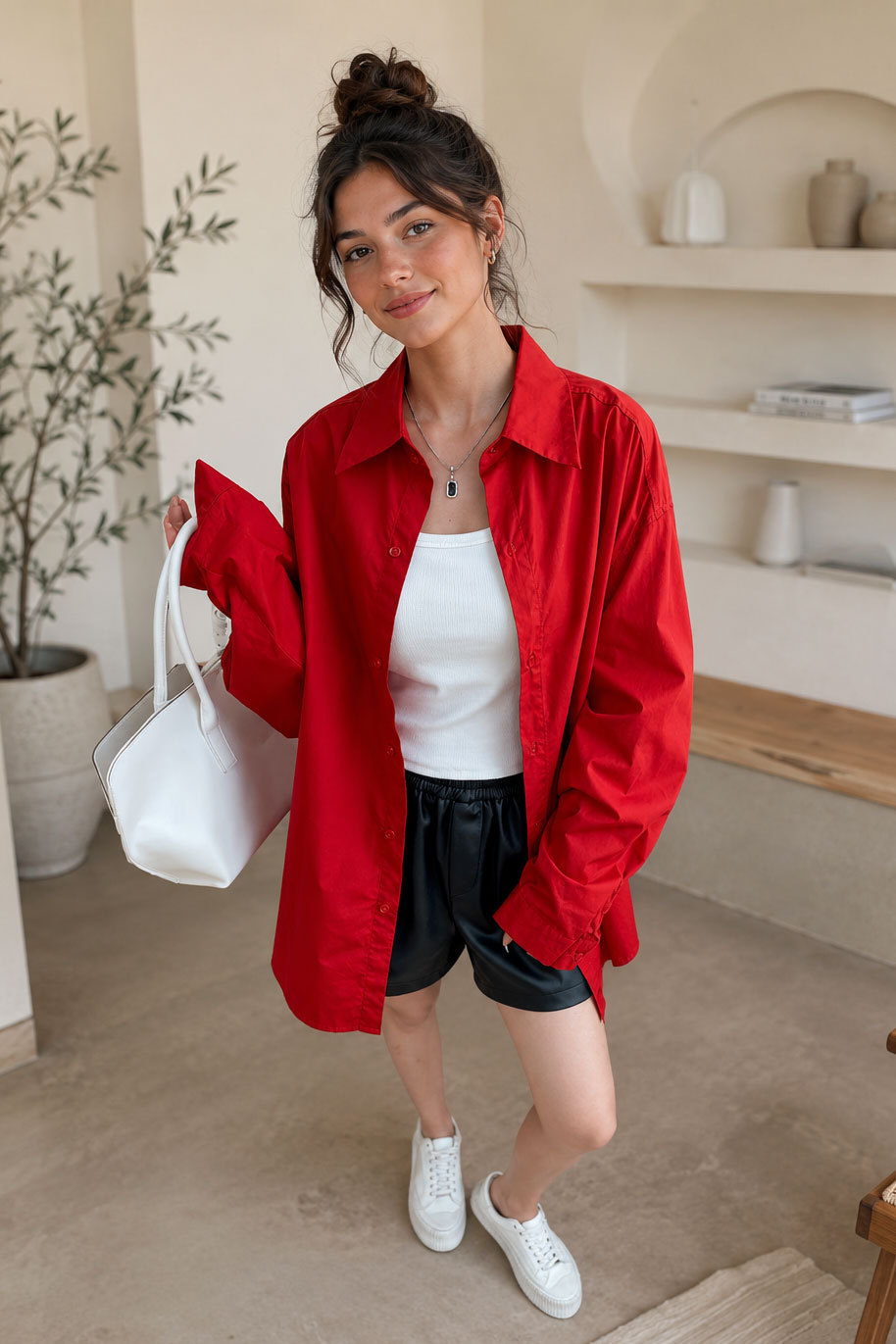
Sleeves can be pushed or rolled to create a little definition at the wrist. Depending on the outfit underneath, the shirt can be worn closed, partially buttoned, or open as a relaxed layer. Shoes and bags then give the silhouette direction: sneakers and a crossbody support movement, while loafers and a cleaner bag can make the same relaxed proportions feel more intentional.
This is a useful formula for coffee, errands, shopping, city walks, and everyday appointments because it allows movement without requiring constant adjustment.
Coffee + a Casual Meeting: Start With a Defined Base
Some days need a middle ground between relaxed and polished. A fitted base is useful here because it introduces clean structure while leaving room for the rest of the outfit to stay casual.
The Contour Collar Bodysuit works as an example of this formula. Pair a defined top with relaxed trousers, wide-leg pants, a simple skirt, or denim. The fitted shape creates visual balance, while a collar or defined neckline subtly raises the level of polish.
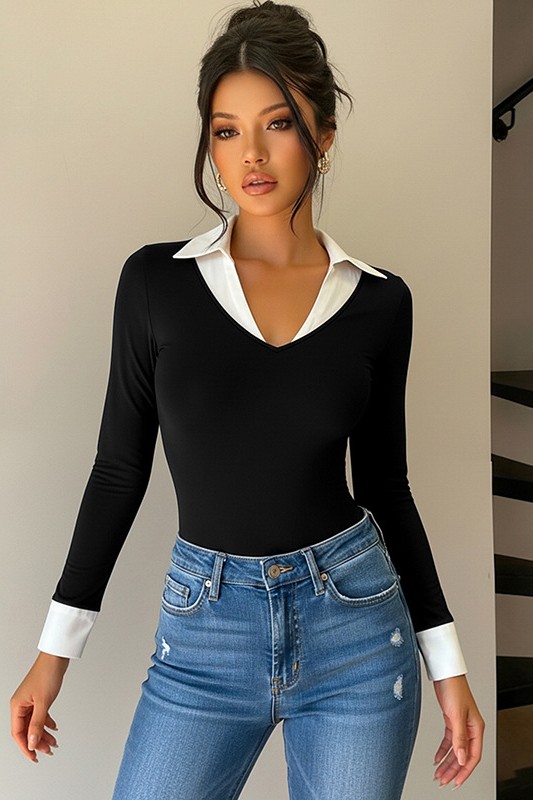
The goal is not to build an office outfit. Keep the lower half easy, choose approachable footwear, and avoid adding formal elements simply because a meeting is on the schedule. For coworking days, casual appointments, coffee meetings, and lunch plans, one clean structural element is often enough.
For days that lean more professional, the same principle of a defined base with wearable styling also connects naturally to Women’s Workwear.
Long City Day: Let Coordination Reduce the Work
A day that includes coffee, shopping, lunch, and several hours on foot creates a different styling problem: the outfit has to remain comfortable after the first photo, the first seat, and the first few blocks.
The Seamed Swing Tank Set offers a coordinated solution for this kind of day. The practical advantage is not simply that the pieces match. It is that the outfit begins with visual cohesion, reducing the number of styling decisions required before leaving home.
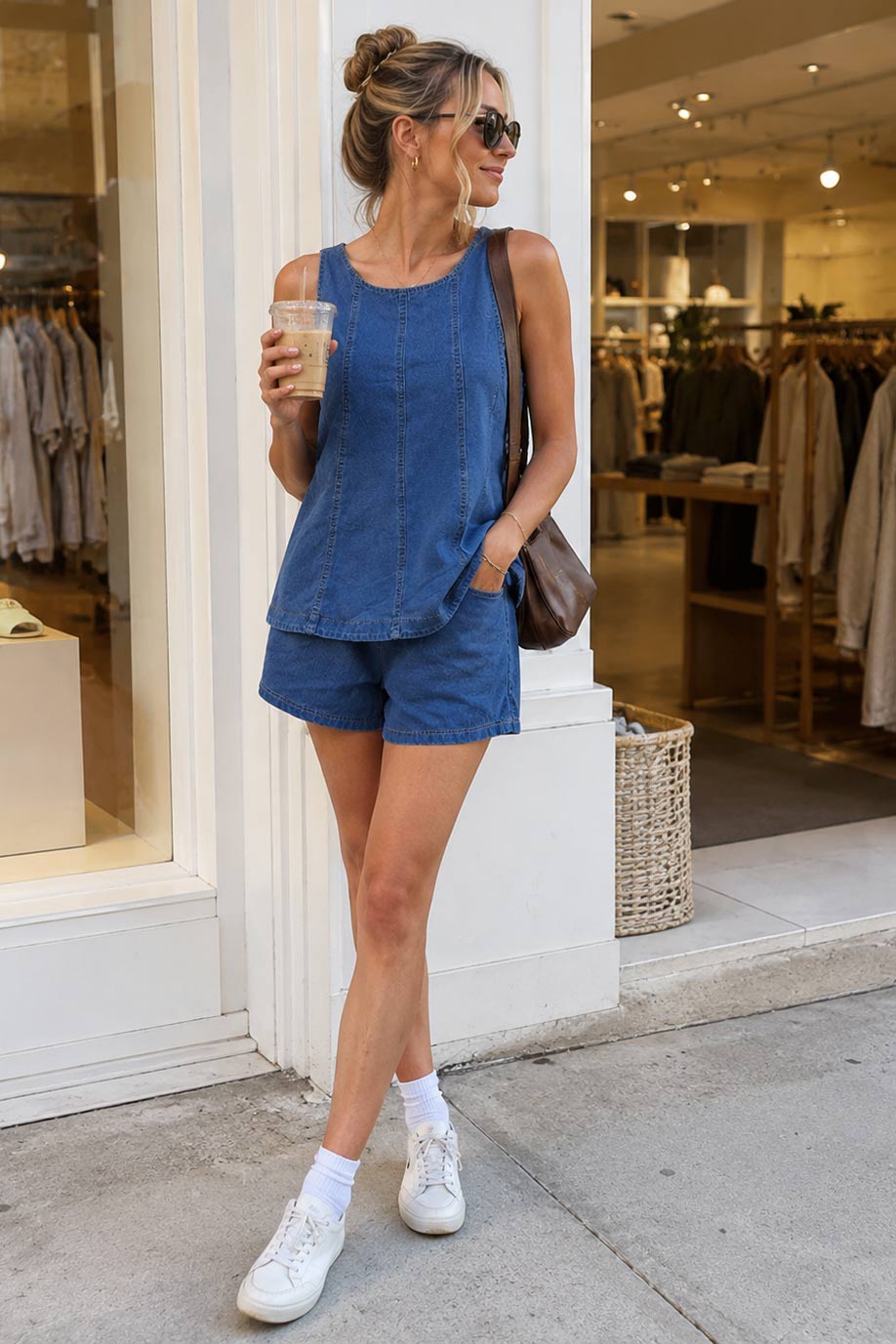
For a multi-stop city day, prioritize pieces that move comfortably and do not need frequent adjustment. Then choose accessories according to the hours ahead: supportive shoes for walking, a bag that holds what the day actually requires, and restrained jewelry that does not complicate the outfit.
This is where coordinated dressing becomes a practical system rather than a styling theme. For more outfit structures built around coordinated pieces, explore Matching Sets.
Warm Morning Coffee: Balance Femininity With Practicality
Warm-weather city dressing often asks for two things at once: a light, feminine look and enough practicality for walking, sitting outdoors, and moving between stops.
The Swiss Dot Ruffle Skort in White shows how a skort can solve that tension. It brings the visual movement and femininity associated with a skirt while offering greater practicality for an active morning.
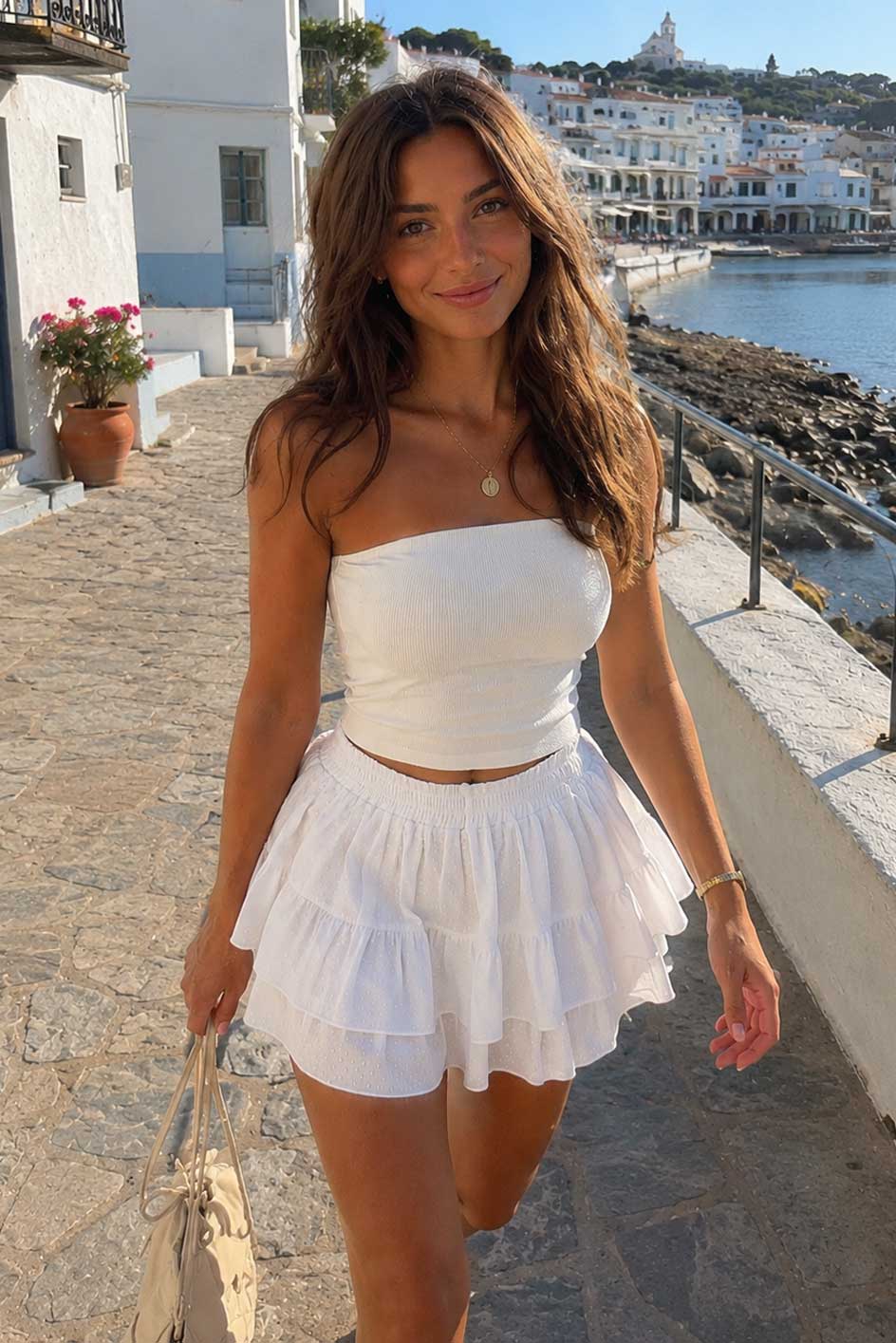
When the bottom already includes ruffles, texture, or other visible detail, pair it with a simpler top. The outfit does not need another competing focal point. Flat sandals, ballet flats, or lightweight sneakers can keep the formula practical for an outdoor café, weekend coffee, brunch, or a daytime walk.
The styling lesson is straightforward: practicality and femininity do not need to cancel each other out. The right garment structure can provide both.
Coffee + Shopping + Later Plans: Build for Adaptability
When the day has no clear end time, flexibility matters more than dressing for one exact destination. A relaxed coordinated base can change direction through small decisions instead of a full outfit change.
The Black Gauze Shirt Set works for this formula because the complete look creates a flexible dark-neutral base. The shirt can be worn as part of the coordinated outfit or used as a light layer when appropriate, giving the silhouette more than one way to function across the day.
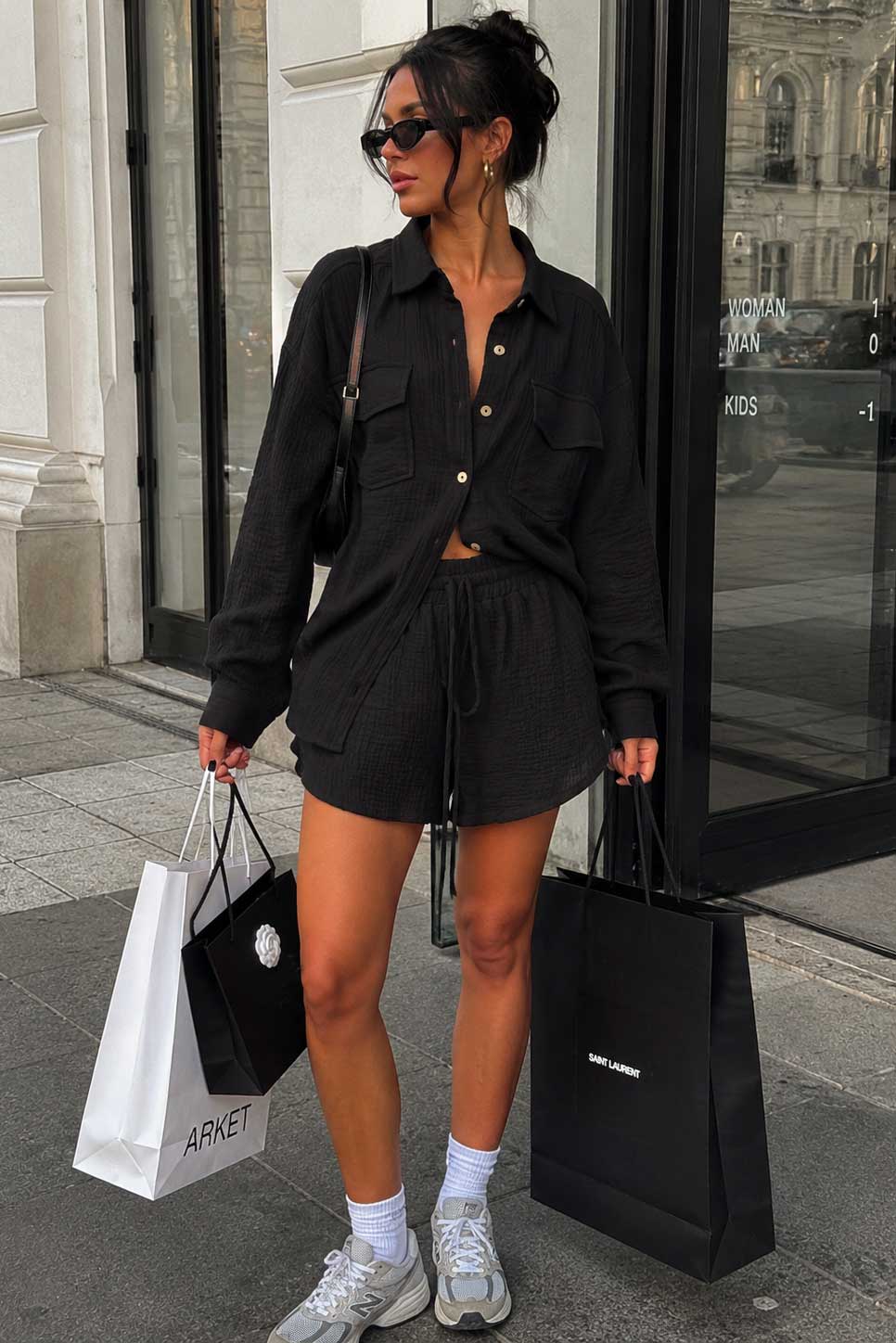
A practical tote can support shopping and a longer day, while a smaller structured bag shifts the outfit toward lunch or later social plans. Shoes can do similar work: a very casual pair emphasizes ease, while loafers, ballet flats, or a refined low heel can make the same base feel more intentional.
The useful idea here is adaptability. A dark neutral coordinated outfit provides a steady foundation while the shirt styling, bag, footwear, and jewelry respond to what happens next.
The Three-Part Coffee Run Formula
A useful coffee run outfit can be reduced to three decisions. The formula is memorable because each part has one clear job.
1. A reliable base. Start with a dress, a coordinated set, or a familiar separates formula that is comfortable and easy to wear. The base should not require constant adjustment or special conditions to work.
2. One point of intention. This can come from texture, embroidery, a collar, an oversized proportion, ruffles, a print, or one deliberate accessory. Not every part of the outfit needs to make a statement. One clear point of interest is often enough.
3. A practical decision based on the rest of the day. Choose the shoes, bag, or layer according to what comes after coffee. Walking for three hours calls for a different decision than moving from a café directly into lunch.
The formula works because it separates styling from logistics without ignoring either. The base creates ease, the intentional element gives the outfit direction, and the practical choice prepares it for the actual day.
Why Proportion Matters More Than Adding More
When an everyday outfit feels unfinished, the instinct is often to add something: another necklace, a belt, a jacket, or a more noticeable bag. Sometimes the better solution is to reconsider the relationship between the existing shapes.
An oversized top can feel more intentional beside a visually quieter bottom. A fitted top can create useful contrast with a relaxed trouser. A detailed bottom usually benefits from a simpler top. A complete coordinated silhouette can carry restrained accessories, while a textured dress may need very little additional styling.
These are relationships, not strict rules. The City Plans Oversized Shirt, Contour Collar Bodysuit, and Swiss Dot Ruffle Skort in White each illustrate a different way proportion can create balance before accessories are added.
For everyday dressing, this matters because proportion does not add physical weight or complexity to an outfit. It changes how the pieces already being worn relate to one another.
Shoes and Bags Should Match the Rest of the Day
The café may be the first destination, but it should not be the only factor behind accessory decisions. Shoes and bags are where the practical reality of the day becomes visible.
Shoes: Sneakers make sense when walking time is high or errands are spread across several stops. Loafers can add definition without becoming formal. Ballet flats work well when the day is social but still casual. Flat sandals suit warm weather and outdoor cafés, while low heels are most useful when walking demands are limited and lunch or a later plan calls for a slightly dressier finish.
Consider weather, total walking time, whether shopping is involved, and the level of polish needed for meetings or lunch. The best shoe is the one that supports the whole schedule rather than looking right for the first twenty minutes.
Bags: Crossbody bags keep hands free and work well for movement. Totes are useful for errands and longer days when carrying capacity matters. A smaller structured bag can give an outfit more direction when coffee continues into lunch or another social plan.
Practicality does not have to make an outfit feel purely functional. The bag simply needs to solve the correct problem for the day.
When Coffee Turns Into Lunch
The most useful everyday outfits can change direction without requiring a full change. If coffee unexpectedly becomes lunch, small adjustments can be enough.
Change a large practical tote for a smaller bag if one is available. Add or remove a light layer. Adjust jewelry. Push up or roll sleeves to change the visual proportion of a shirt. Switch footwear when realistic. Wear an open shirt as a layer, then button or partially button it for a more defined silhouette.
The strongest everyday wardrobe is not built around predicting every plan. It is built around outfits with enough flexibility to respond when plans change. That same principle is useful for travel days, where one outfit may need to handle several environments; the Travel Day Outfits page explores that kind of practical versatility.
Common Coffee Run Outfit Mistakes
Most coffee run outfit problems are less about individual garments and more about planning for the wrong version of the day.
- Dressing only for the first twenty minutes: An outfit can work perfectly at a café and become inconvenient once walking, errands, or lunch enter the schedule.
- Ignoring several-hour comfort: Consider how the outfit feels sitting, walking, carrying a bag, and moving between locations.
- Adding too many accessories: More detail does not automatically make a casual outfit feel intentional. One clear focal point is often stronger.
- Ignoring proportion: Before adding another piece, check whether the shapes already being worn balance one another.
- Choosing the wrong bag for the day: A tiny bag can become frustrating during errands, while an oversized tote may feel unnecessary for a short social plan.
- Choosing shoes that limit the schedule: If footwear makes walking or shopping unrealistic, it reduces the flexibility of the whole outfit.
- Confusing relaxed with high-maintenance: A casual outfit should not require constant pulling, adjusting, or restyling to stay comfortable.
Choose Your Formula for the Day
If you are only getting coffee: Choose the simplest reliable formula that makes you feel ready to leave the house.
If coffee is followed by errands: Prioritize movement, practical shoes, and a useful bag. Relaxed proportion can work especially well when the silhouette still has direction.
If coffee may become lunch: Choose one-piece dressing or a formula with enough visual intention to move naturally into a social setting.
If you have a casual meeting: Start with a cleaner, more defined base and keep the rest relaxed. One structured element can be enough.
If you will spend several hours in the city: Prioritize comfort, coordination, and pieces that do not require constant adjustment.
If you do not know what happens next: Choose a flexible base that can change direction through shoes, bag, jewelry, or a light layer.
Why Small Plans Still Shape a Wardrobe
Everyday wardrobes are often shaped more by repeated small plans than major occasions. Coffee, errands, shopping, lunch, casual meetings, and spontaneous stops may occupy far more real wardrobe time than special events.
Recognizing those repeated situations can lead to better clothing decisions. The purpose is not to buy more. It is to understand which silhouettes, formulas, shoes, bags, and layers genuinely support the way the day usually unfolds.
Once those patterns are clear, everyday dressing becomes less about inventing a new outfit for every small plan and more about refining a few reliable formulas that can adapt.
A Strong Starting Point for Whatever Happens Next
A good coffee run outfit does not need to predict the entire day. It needs to provide a strong starting point.
Begin with a reliable base. Add one intentional detail. Then make one practical decision based on what the day might require. That combination creates an outfit that can move from the first coffee into errands, shopping, lunch, a meeting, or an unplanned afternoon without feeling overdone at the beginning or underprepared later.
Made for mornings that turn into plans.
About the Author
Laney - Style Editor at Awesome Jade
She creates styling content focused on vacation outfits, matching sets, dinner looks, and everyday outfit planning for women.
Frequently Asked Questions
What should I wear for a coffee run?
Start with a reliable base such as a simple dress, coordinated set, or familiar separates formula. Add one intentional detail, then choose shoes and a bag based on what you are doing after coffee.
How can I look put together for a casual coffee date?
Focus on one clear styling decision rather than adding many accessories. A textured dress, defined neckline, balanced proportion, or detailed bottom paired with simpler pieces can make a casual outfit feel intentional.
What shoes are best for a coffee run and errands?
Sneakers, loafers, ballet flats, and practical flat sandals are useful choices. Select footwear according to walking time, weather, and how many stops are planned for the rest of the day.
Can I wear a matching set for a coffee run?
Yes. A coordinated set is especially useful when coffee is followed by shopping, lunch, or several hours in the city because it creates a complete outfit with fewer styling decisions.
What should I wear if coffee may turn into lunch?
Choose a one-piece outfit or a simple formula with enough visual intention for a social setting. A dress with texture, a fitted top with relaxed bottoms, or a coordinated base can transition easily with a bag or shoe change.
How do I style an oversized shirt for everyday plans?
Balance the shirt's volume with a simpler bottom and use sleeve styling, footwear, and bag choice to give the silhouette direction. The goal is intentional ease rather than a rigid proportion rule.
What bag is best for coffee and shopping?
A crossbody bag works well for hands-free movement, while a tote is useful when errands or purchases require more carrying space. If the day continues into lunch, a smaller structured bag can make the outfit feel more polished.
How do I build a simple everyday outfit formula?
Choose a comfortable base you already know works, add one point of visual intention, and make one practical choice based on the rest of the day. Repeat the structure with different shoes, bags, layers, and proportions.