
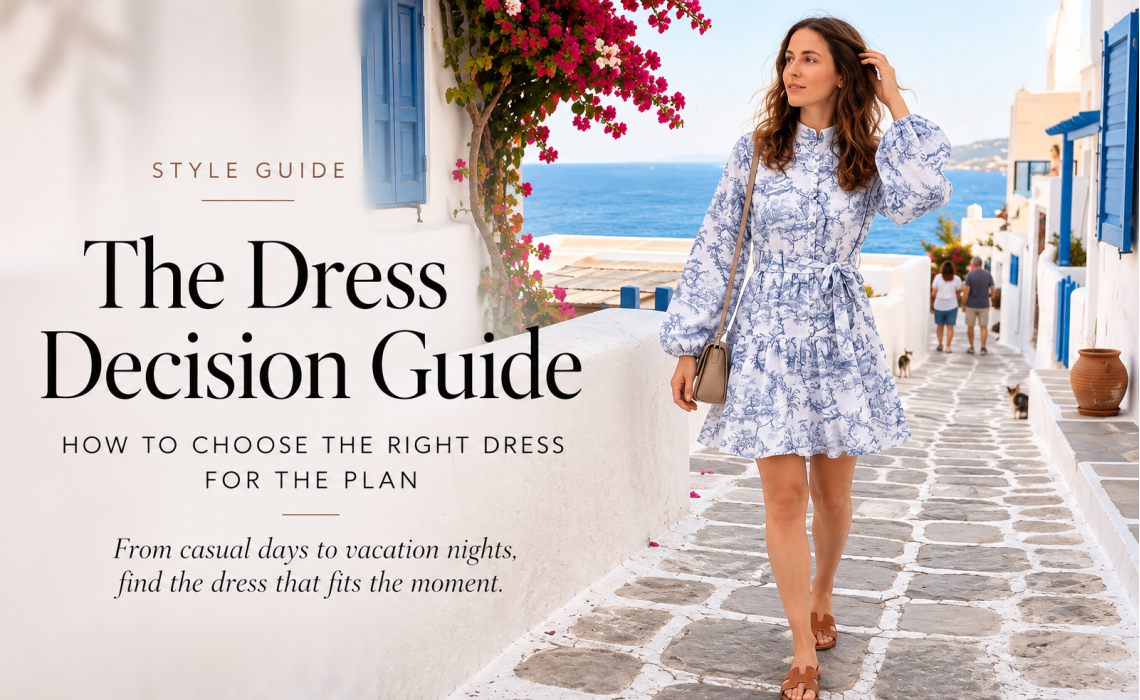
The Dress Decision Guide: How to Choose the Right Dress for the Plan
STYLE GUIDE
Choose the dress for the plan - not just the dress you like.
The right dress depends on where you're going, how polished the plan feels, how much you'll move, and what the setting calls for. This guide makes the decision easier by connecting silhouette, length, fabric, comfort, and details to real plans from brunch and vacation days to dinner, dates, and celebrations.
Dressed for where the day goes.
How to Choose a Dress Based on the Plan
Choosing the right dress becomes much easier when you stop asking, “Which dress do I like most?” and start asking, “What does this plan require from my outfit?”
A dress for an outdoor brunch has a different job from a dress for cocktails, even when both could technically be described as “cute.” The setting determines how much structure, movement, coverage, polish, and visual detail makes sense.
A useful decision order is occasion → formality → movement → silhouette → fabric → details. Start with what you're doing and work toward the dress rather than choosing a dress first and trying to make it fit the occasion.
- Casual daytime: easy silhouettes, comfortable fabrics, playful prints, uncomplicated styling.
- Vacation: movement, breathable or visually light fabrics, destination-friendly details, easy accessories.
- Polished daytime or city plans: cleaner lines, intentional length, refined accessories, enough structure to look finished.
- Dinner and date night: stronger silhouettes, richer textures, sheer details, darker colors, or a more noticeable neckline.
- Celebrations: elevated fabrics, dimensional details, special straps, tulle, pleating, or other elements that distinguish the dress from everyday pieces.
The goal is not to follow rigid dress rules. It is to make sure the energy of the dress and the energy of the plan make sense together.
1. For Casual Daytime Plans: Choose Ease Before Drama
Occasion: brunch, coffee, farmers markets, casual lunches, daytime dates, and relaxed weekend plans.
Outfit combination: printed mini dress + flat sandal or simple sneaker + small shoulder bag + minimal jewelry.
For casual daytime plans, look for a dress that feels easy while still appearing intentional. A mini or relaxed midi often works because the shorter or less formal silhouette naturally keeps the outfit from feeling overly dressed.
The Twist Bodice Gingham Dress is a useful example. Gingham communicates daytime immediately, while the twist-bodice detail gives the outfit enough shape and interest to feel styled rather than basic.
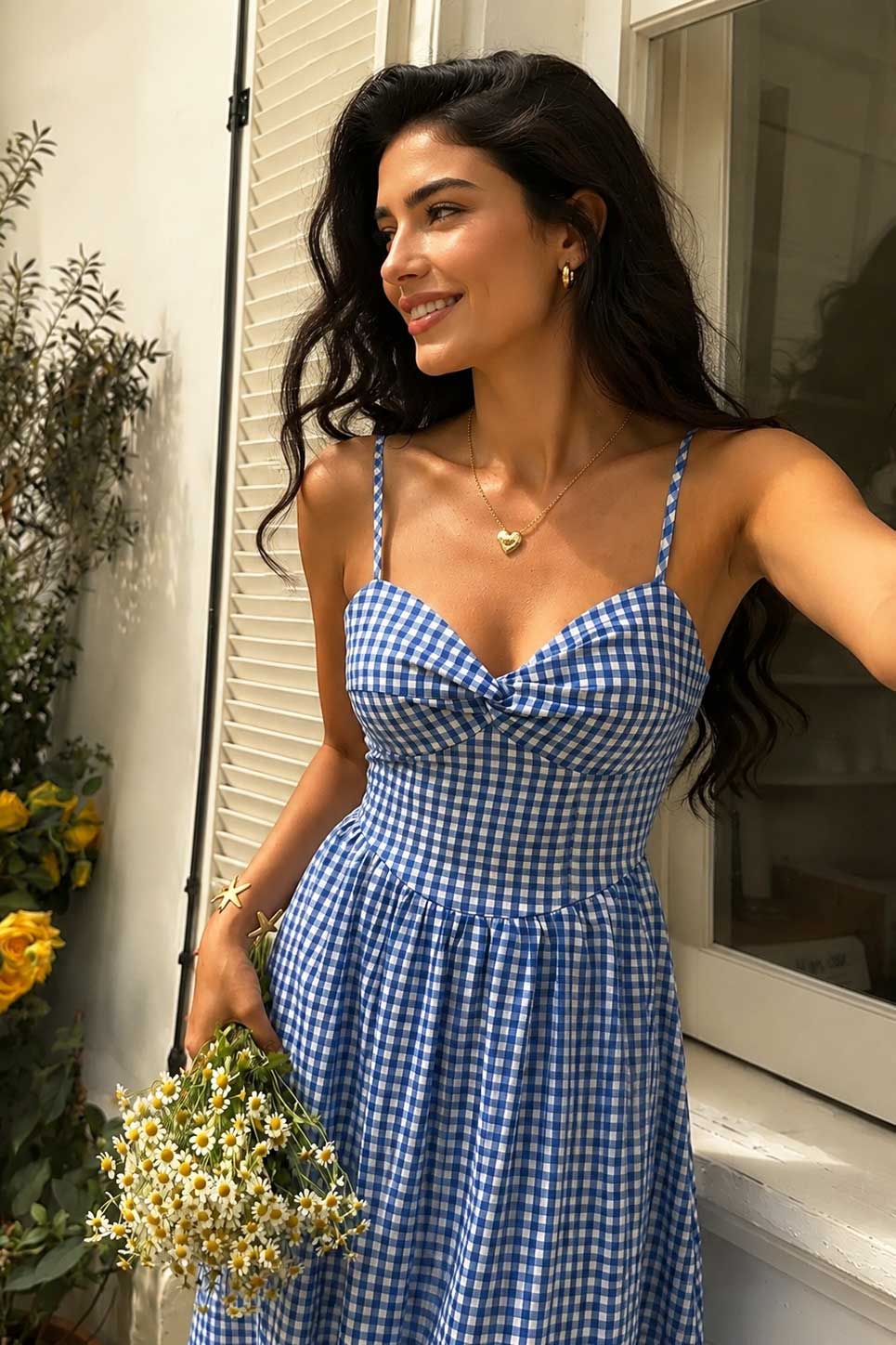
Why it works: the balance is right. The pattern feels approachable and daytime-friendly, while the bodice adds definition. Pair it with flat sandals for brunch or simple sneakers when the day includes more walking.
Where to wear it: brunch, outdoor lunches, shopping, weekend plans, casual daytime dates, or an afternoon that may turn into early drinks.
For more relaxed outfit direction, the Everyday Plans edit is a natural next stop.
2. For Vacation Days: Prioritize Movement and Destination Energy
Occasion: resort lunches, coastal afternoons, sightseeing followed by drinks, poolside restaurants, and warm-weather vacation plans.
Outfit combination: flowing halter dress + flat leather sandals + woven or compact bag + lightweight earrings.
Vacation dresses should look good in motion. Before choosing one, imagine walking several blocks, sitting through lunch, climbing steps, catching a breeze, and staying in the outfit for several hours. A dress that only works while standing still is rarely the best vacation choice.
The Enora Halter Tiered Dress in Light Blue demonstrates the formula well. The halter neckline creates a defined upper silhouette while the tiered construction brings movement through the dress.
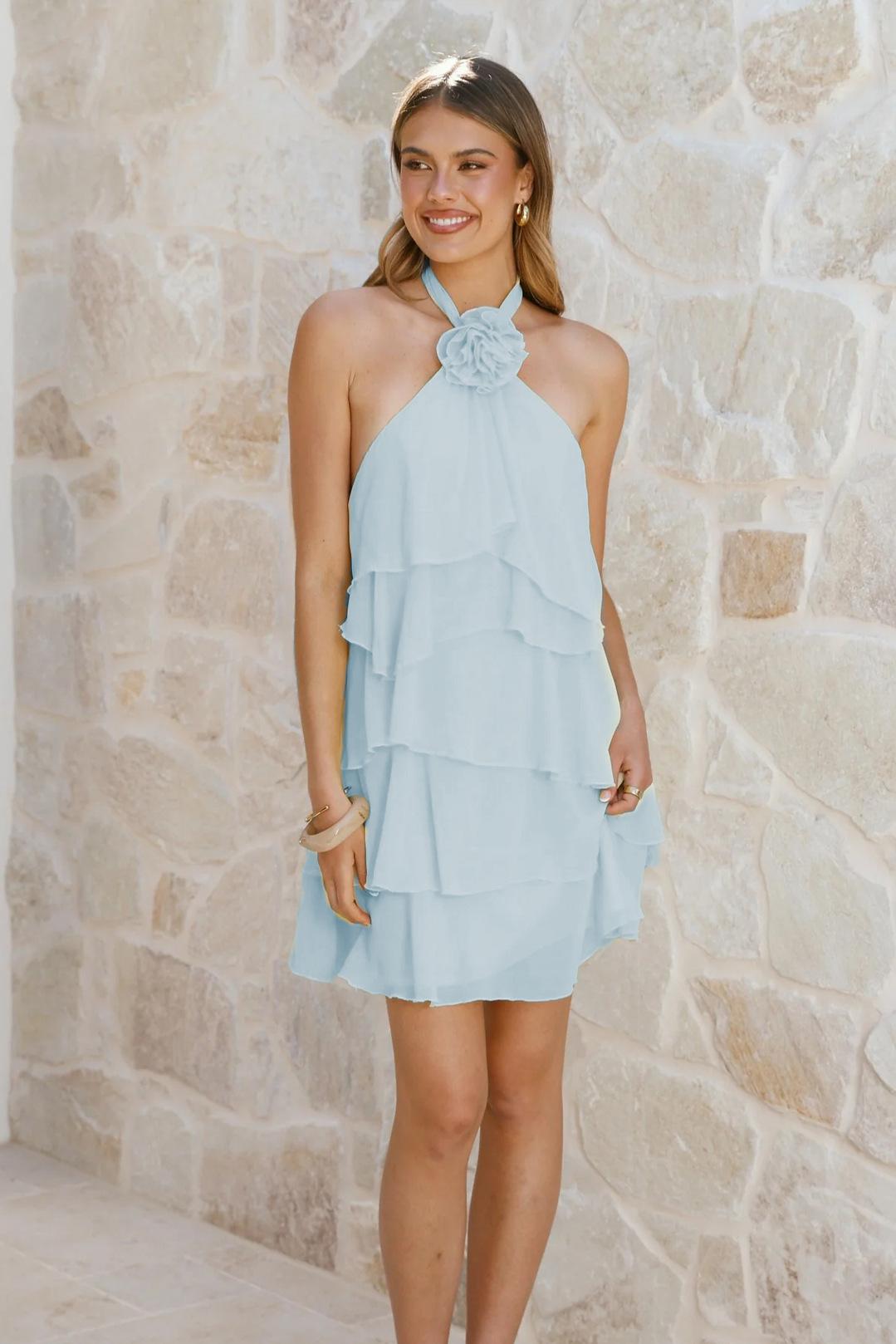
Why it works: light blue and a tiered shape visually suit warm destinations, while the silhouette has enough presence for a restaurant without feeling too formal for daytime.
Where to wear it: resort lunches, coastal sightseeing, vacation brunch, waterfront drinks, or a warm afternoon that continues into early evening.
When the itinerary is built around sunshine and relaxed plans, browse Vacation Day for more outfit direction. This is the kind of dressing that's made for warm destinations and late lunches.
3. For Brunch and Feminine Day Plans: Let Print Do Some of the Styling
Occasion: garden brunch, birthday lunch, daytime date, shower, or a pretty restaurant.
Outfit combination: floral mini dress + delicate sandal + structured mini bag + understated jewelry.
When the plan is social and feminine but not formal, a print can create visual interest without requiring complicated accessories. The important decision is whether the silhouette keeps the print feeling modern and wearable.
The Chloe Garden Mini Dress in Grey works for plans that call for more personality than an everyday dress but less formality than eveningwear.
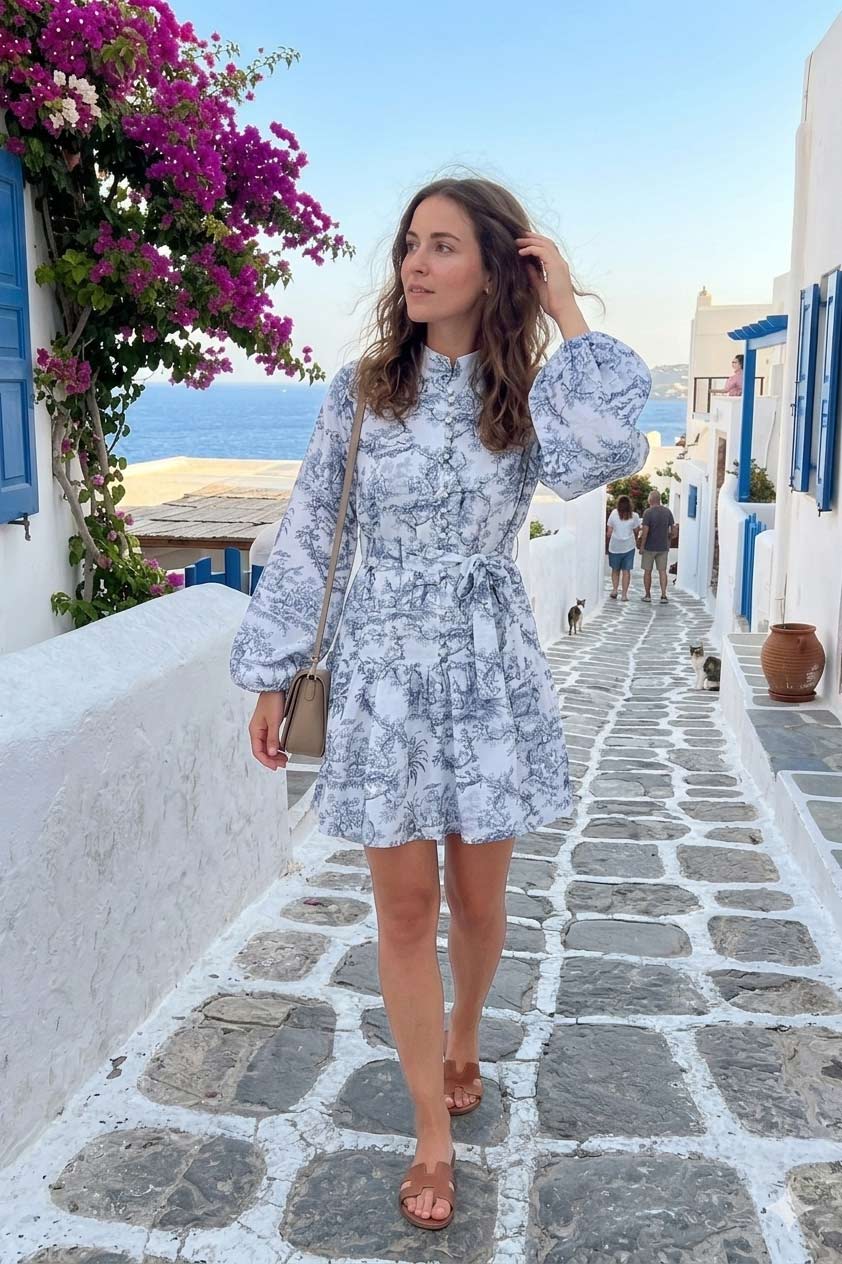
Why it works: the garden-inspired look gives the outfit occasion energy, while the mini length keeps it youthful and appropriate for daytime. Because the dress already provides the visual detail, accessories can stay restrained.
Where to wear it: birthday brunch, showers, daytime celebrations, lunch dates, or dressed-up weekend plans.
If the setting is specifically coastal or vacation-based, compare the mood with the Beach Brunch Looks guide before deciding how polished to go.
4. For Polished City Plans: Choose a Midi That Can Change With Accessories
Occasion: gallery visits, city lunches, work-adjacent events, cocktails after daytime plans, and polished occasions without a formal dress code.
Outfit combination: black pleated midi + sleek flats or low heels + structured bag + simple metal jewelry.
For plans where “casual” feels too relaxed but cocktail dressing feels excessive, the midi dress is often the easiest middle ground. Length adds polish, while the fabric and accessories determine exactly how formal the outfit becomes.
The Alyssa Pleated Midi Dress in Black is a strong example because pleating creates movement without sacrificing refinement.
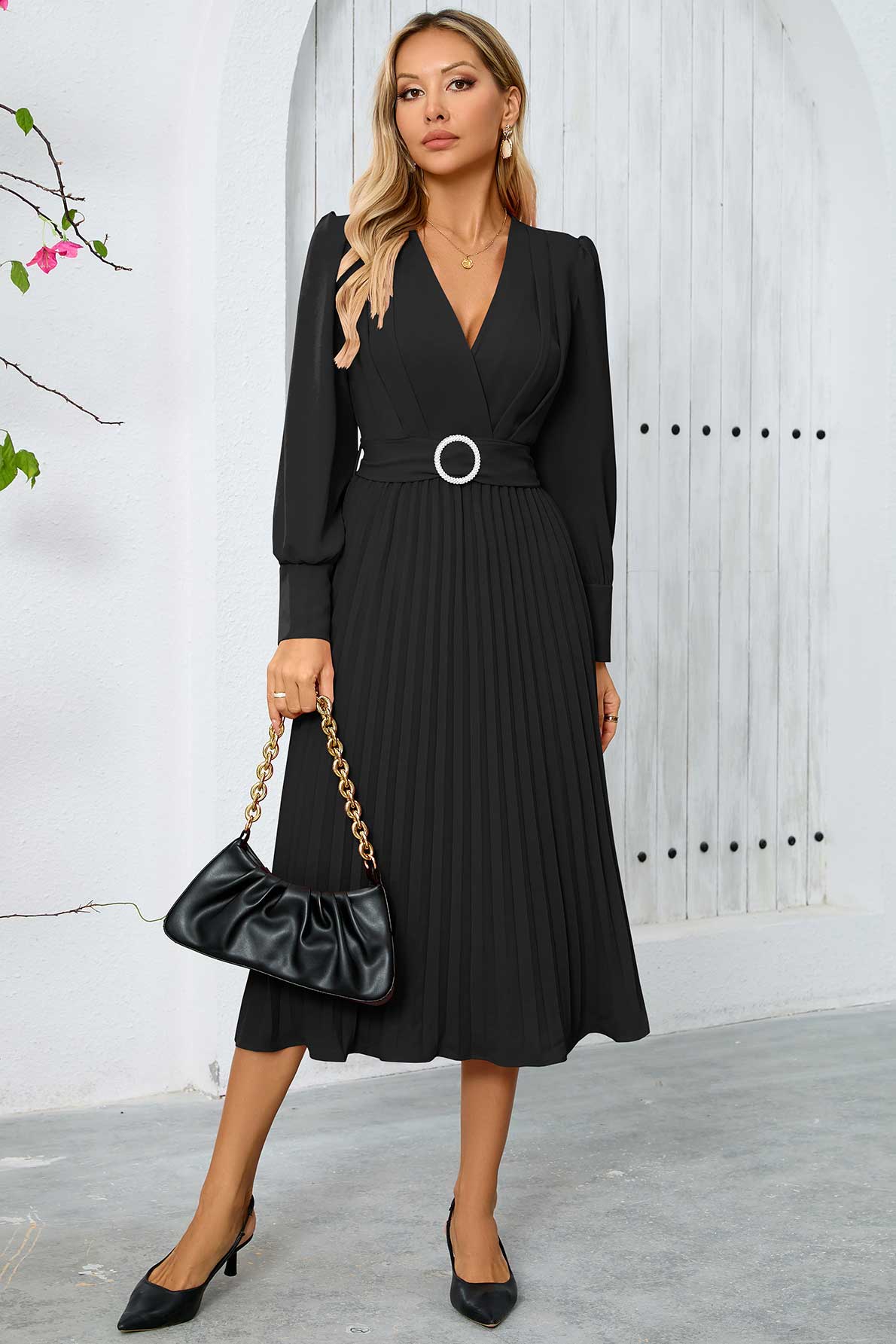
Why it works: black immediately gives the outfit versatility, while the midi length and pleating create a more polished impression than a casual mini. Flats and a daytime bag keep it city-day appropriate; heels and smaller accessories shift it toward evening.
Where to wear it: museums, upscale lunches, city dates, work-related social plans, cocktail bars, or an itinerary that crosses from afternoon into evening.
This is also where the Day-to-Night approach becomes useful: instead of changing the entire outfit, change the signals around the dress.
5. For Dinner and Date Night: Increase the Detail, Not Necessarily the Formality
Occasion: dinner reservations, cocktails, date night, rooftop drinks, or an evening out.
Outfit combination: sheer-detail dress + slim heel + compact evening bag + simple earrings.
An evening dress does not automatically need to be long or formal. Often, the difference between a daytime dress and a dinner dress comes from fabric and detail: sheer elements, texture, darker tones, a stronger neckline, or a silhouette that feels more deliberate.
The Abby Sheer Polka-Dot Dress illustrates how a familiar print can take on a more evening-oriented mood when paired with sheer detailing.
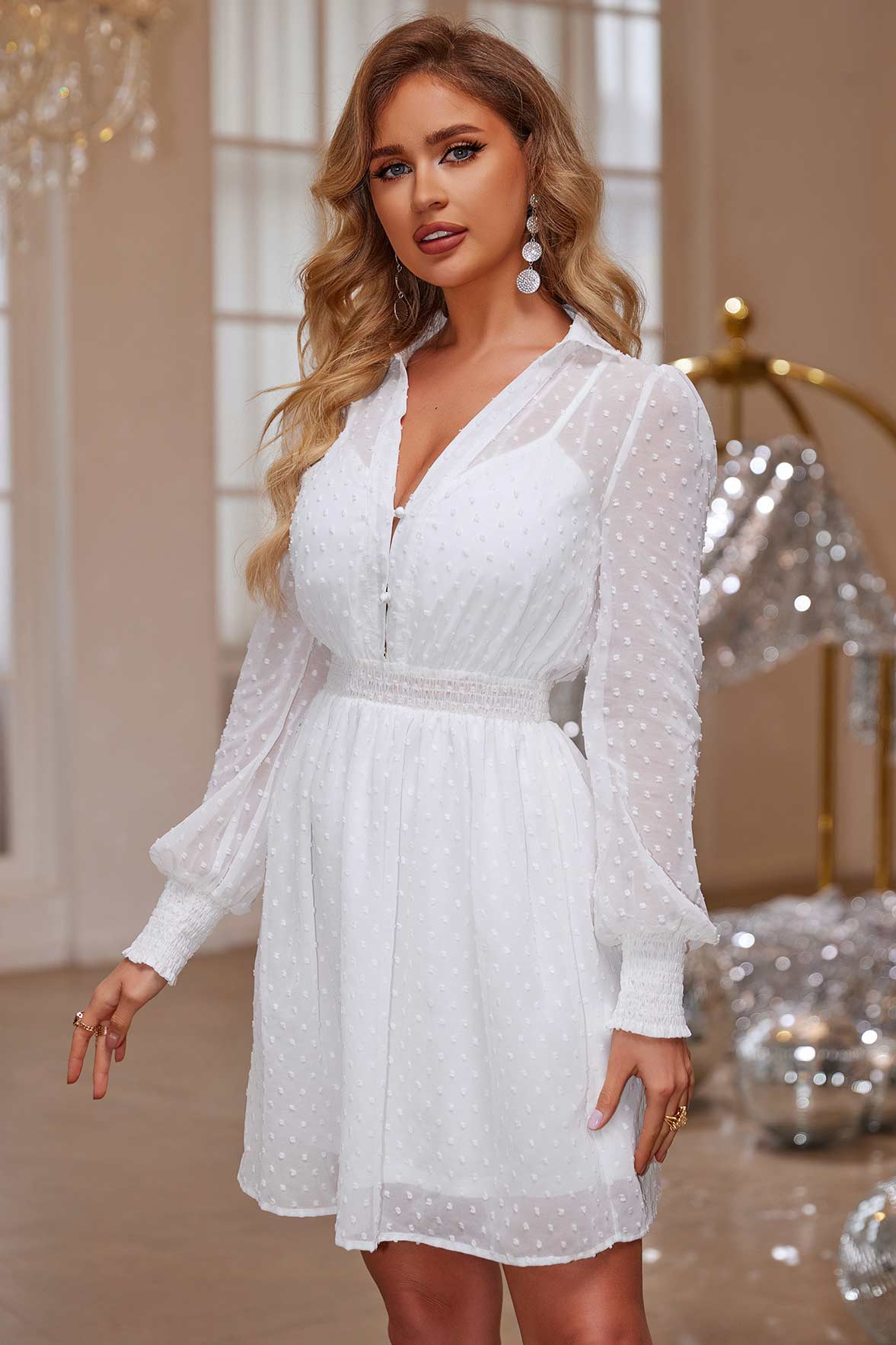
Why it works: polka dots provide personality, while sheer detail raises the visual interest and makes the dress feel more intentional after dark. Keep the accessories streamlined so they complement rather than compete with the dress.
Where to wear it: date night, dinner and cocktails, rooftop bars, evening birthdays, or a dressed-up night out.
For more evening outfit decisions, the Dinner & Drinks guide connects naturally to plans where the restaurant is only the beginning of the night.
6. For Celebrations: Choose the Dress With a Clear Special-Occasion Signal
Occasion: milestone birthdays, cocktail celebrations, holiday parties, special dinners, and dressier evening events.
Outfit combination: black tulle dress with pearl straps + refined heel + minimal clutch + restrained jewelry.
When the occasion is genuinely special, the dress should have at least one element that separates it from what you would wear to an ordinary dinner. That could be fabric, volume, embellishment, construction, or a distinctive detail.
The Mila Pearl Strap Black Tulle Dress has several of those signals at once: black creates an evening foundation, while tulle and pearl straps introduce texture and occasion-specific detail.
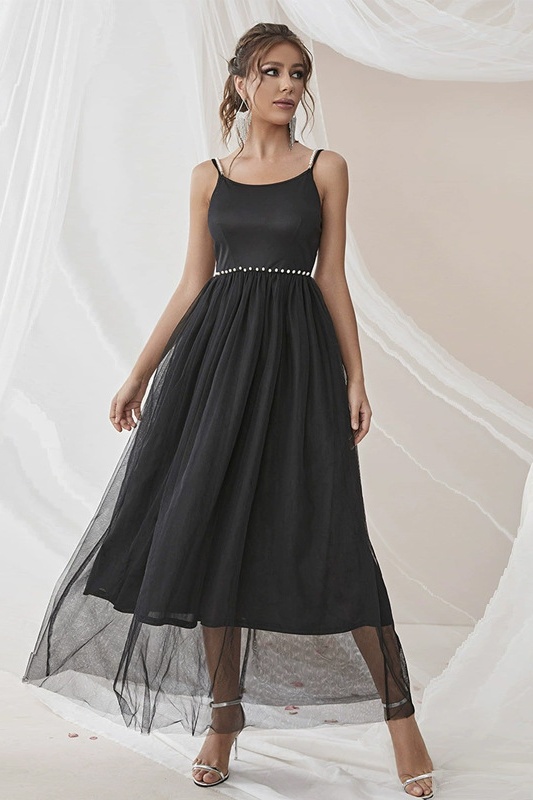
Why it works: the special details do the dressing up for you. When a dress has tulle, embellishment, or another noticeable feature, simpler shoes, jewelry, and bags usually create the more polished result.
Where to wear it: cocktail parties, milestone birthdays, holiday events, celebration dinners, or other occasions where a standard dinner dress would feel too understated.
Fabric Guide: How Fabric Changes the Formality of a Dress
Silhouette and length matter, but fabric is one of the quickest ways to read how formal a dress feels. Two dresses with a similar shape can belong to completely different occasions because of their material and construction.
- Easy woven fabrics and familiar prints: usually read more casual and work naturally for brunch, daytime plans, and vacations.
- Flowing and tiered fabrics: create movement and work especially well for warm-weather destinations and relaxed occasions.
- Pleating: adds structure and visual refinement, making a dress easier to style for polished daytime plans or evening.
- Sheer details: often move a dress toward date-night and evening territory because they add visual depth and a more deliberate finish.
- Tulle and embellishment: communicate celebration quickly and are usually best when the rest of the outfit remains simple.
When you're uncertain whether a dress is formal enough, look beyond the hemline. A midi is not automatically dressy, and a mini is not automatically casual. Fabric, construction, neckline, detail, and styling all influence the final level of formality.
The Three Questions to Ask Before You Leave
Once you've narrowed down the dress, run it through three final questions.
- Can I comfortably do the actual plan in this? Think about walking, sitting, eating, weather, transportation, and how many hours you'll be out.
- Does the dress match the most important part of the itinerary? If you're sightseeing for six hours before one drink, dress primarily for the daytime. If dinner is the main event, let the evening setting lead.
- Are my accessories moving the dress in the right direction? Flat sandals, sneakers, roomy bags, and natural textures tend to relax a dress. Heels, structured bags, refined jewelry, and smaller evening accessories tend to elevate it.
The best dress decision is the one that makes sense once the whole plan is considered. Start with where you're going, decide how formal the setting really is, account for movement and comfort, and then choose the silhouette, fabric, and details that support it.
The best dress isn't simply the one that looks right on the hanger. It's the one that makes sense for where you're going, how you'll spend the day, and how you want to feel once you get there.
About the Author
Harper is the Fashion Content Editor at Awesome Jade. She creates outfit guides and styling content focused on dinner outfits, vacation night looks, occasion dressing, and day-to-night style.
Frequently Asked Questions
How do I choose the right dress for an occasion?
Start with the setting and level of formality, then consider how much you'll walk or move. Choose the silhouette, length, fabric, and details only after you understand what the plan requires.
How can I tell if a dress is too formal?
Look at the complete combination of fabric, embellishment, silhouette, and accessories. Tulle, dramatic details, refined heels, and evening bags raise formality, while simple fabrics and relaxed accessories bring it down.
Is a midi dress more formal than a mini dress?
Not always. Midi length can look polished, but fabric and construction matter just as much. A structured or pleated midi generally reads dressier than a relaxed casual midi, while a detailed mini can work well for evening plans.
What type of dress is best for brunch?
A comfortable mini or midi with a print, light movement, or feminine detail works well for brunch. Choose something polished enough for the venue but easy enough for a daytime setting.
What kind of dress should I wear on vacation?
Choose a dress that moves comfortably, suits the climate, and works with simple shoes. Flowing silhouettes, tiered shapes, and destination-friendly colors are especially useful for warm-weather vacation plans.
What makes a dress appropriate for date night?
Date-night dresses often use stronger evening signals such as sheer details, texture, a defined silhouette, darker color, or an interesting neckline without needing to be formally dressed up.
What dress should I wear to a celebration?
Choose a dress with a clear special-occasion element such as tulle, embellishment, distinctive straps, pleating, or elevated construction. Let that feature lead and keep competing accessories minimal.