

Dressing for a Full Day in the City
STYLE GUIDE
How to Build an Outfit That Works From Morning Plans to Evening Possibilities
A full day in the city rarely follows a perfect schedule. One appointment often leads to lunch, shopping, a museum visit, meeting friends, or even dinner later in the evening. This guide explains how to choose clothing that supports movement, changing plans, and different settings without feeling over- or underdressed.
Dressed for where the day goes.
Dressing for a Full Day in the City
A successful city outfit isn't built around a single destination. It's built around everything that might happen between leaving home and heading back. A morning appointment can become lunch with friends. An afternoon of shopping may include a gallery visit or an unexpected dinner reservation. Even a simple walk through the city often means moving between busy sidewalks, cafés, public transport, and air-conditioned interiors.
That makes dressing for a full day in the city different from dressing for one occasion. Instead of asking, "What should I wear to lunch?" the better question becomes, "What outfit will still make sense six hours from now?"
The answer usually comes from choosing clothing that balances structure with comfort. The right silhouette should support movement, adapt to different environments, and feel appropriate whether you're sitting down for lunch, browsing local shops, or ending the day with drinks.
If your wardrobe is built around real plans instead of isolated occasions, you'll naturally create outfits that work across multiple settings rather than requiring a complete change halfway through the day.
Why Dressing for a Full Day in the City Is Different
A city day asks more from your clothing than most single-event outfits. You're likely to spend time walking, standing, sitting, and moving between indoor and outdoor spaces. The level of formality also changes throughout the day. A casual morning coffee can be followed by a business appointment, while an afternoon museum visit may lead straight into dinner.
Rather than focusing only on how an outfit looks when you leave home, think about how it will perform throughout the day.
- Can you comfortably walk for several hours?
- Will the outfit still feel polished after sitting through lunch?
- Does it work equally well in relaxed and slightly dressier settings?
- Will changing temperatures make you uncomfortable?
- Can your accessories help the outfit transition into evening if plans change?
The strongest city outfits aren't necessarily the most minimal or the most formal. They succeed because every element—the silhouette, fabric, shoes, and accessories—supports the way the day is likely to unfold.
That's also why relaxed tailoring, coordinated separates, and thoughtfully chosen dresses have become reliable options for Everyday Plans. Each provides enough visual structure to feel intentional while remaining comfortable enough for several different stops throughout the day.
Start With the Shape of Your Day
Before choosing individual garments, consider the overall structure of your itinerary. The same wardrobe can produce very different outfits depending on how your day is likely to unfold.
A Structured Day
If your schedule includes appointments, lunch reservations, or casual meetings, visual structure becomes more important than dramatic styling. Coordinated tailoring communicates organization without feeling as formal as traditional office wear.
A Walking-Heavy Day
When museums, shopping streets, galleries, and neighbourhood exploration make up most of your plans, movement should become your first priority. Stable silhouettes, breathable fabrics, and practical footwear help the outfit remain comfortable over several hours.
A Social Day
Meeting friends throughout the day often means moving between cafés, boutiques, outdoor seating, and relaxed restaurants. Here, texture, colour, embroidery, or coordinated sets can add personality without making the outfit feel overdressed.
An Open-Ended Day
Sometimes only the morning is planned. Those are the days when adaptable pieces become most valuable. A structured dress, matching set, or tailored separates can easily respond to unexpected invitations simply by adjusting accessories or adding a layer.
Understanding the shape of your day makes every styling decision easier because each garment serves a purpose rather than simply filling space in the outfit.
Ways to Dress for a Full Day in the City
Start Strong With Relaxed Tailoring
When your day begins with an appointment and continues into lunch or shopping, coordinated tailoring provides a sense of structure without feeling overly formal.
The Allegra Tailored Short Matching Set demonstrates how relaxed tailoring fits modern city dressing. Matching shorts and a tailored top create a complete silhouette that looks intentional from the moment you leave home, yet the shorter proportions keep the outfit appropriate for daytime social settings rather than traditional office environments.
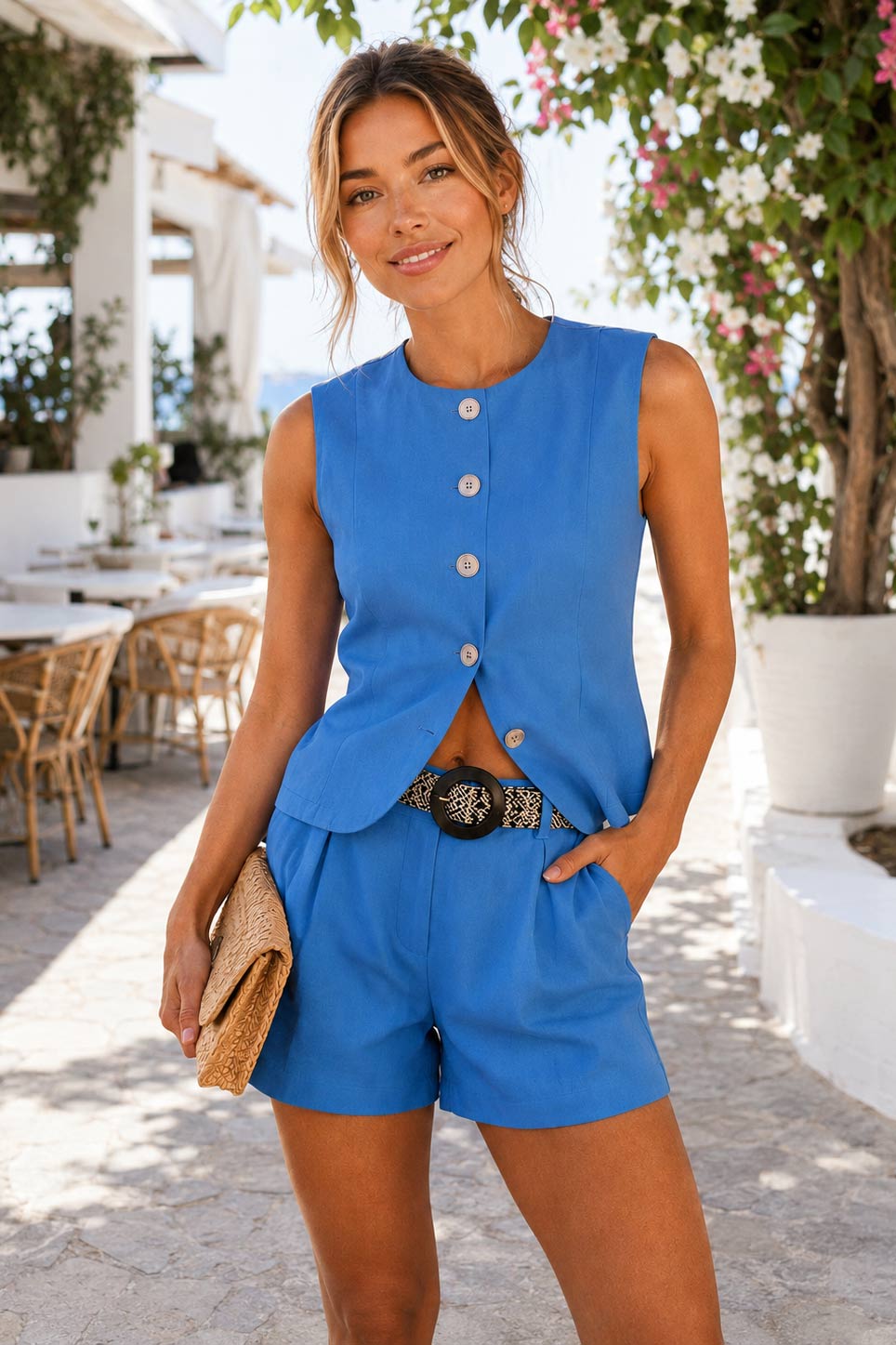
Comfortable loafers, refined flats, or clean leather sneakers soften the tailored lines, allowing the outfit to move naturally from a morning commitment into lunch and an afternoon of browsing local shops. Instead of relying on multiple styling decisions throughout the day, the coordinated silhouette does most of the work for you.
When the Day Becomes More Social
Not every city day revolves around appointments. Sometimes the focus shifts toward lunch with friends, shopping districts, cafés, and relaxed conversations that stretch into the afternoon. Those days benefit from coordinated dressing that feels polished without becoming overly structured.
The Noemie Button Front Rose Skirt Set offers a good example. Because the top and skirt are designed together, the outfit immediately feels complete, reducing the need to coordinate several separate pieces before leaving home.
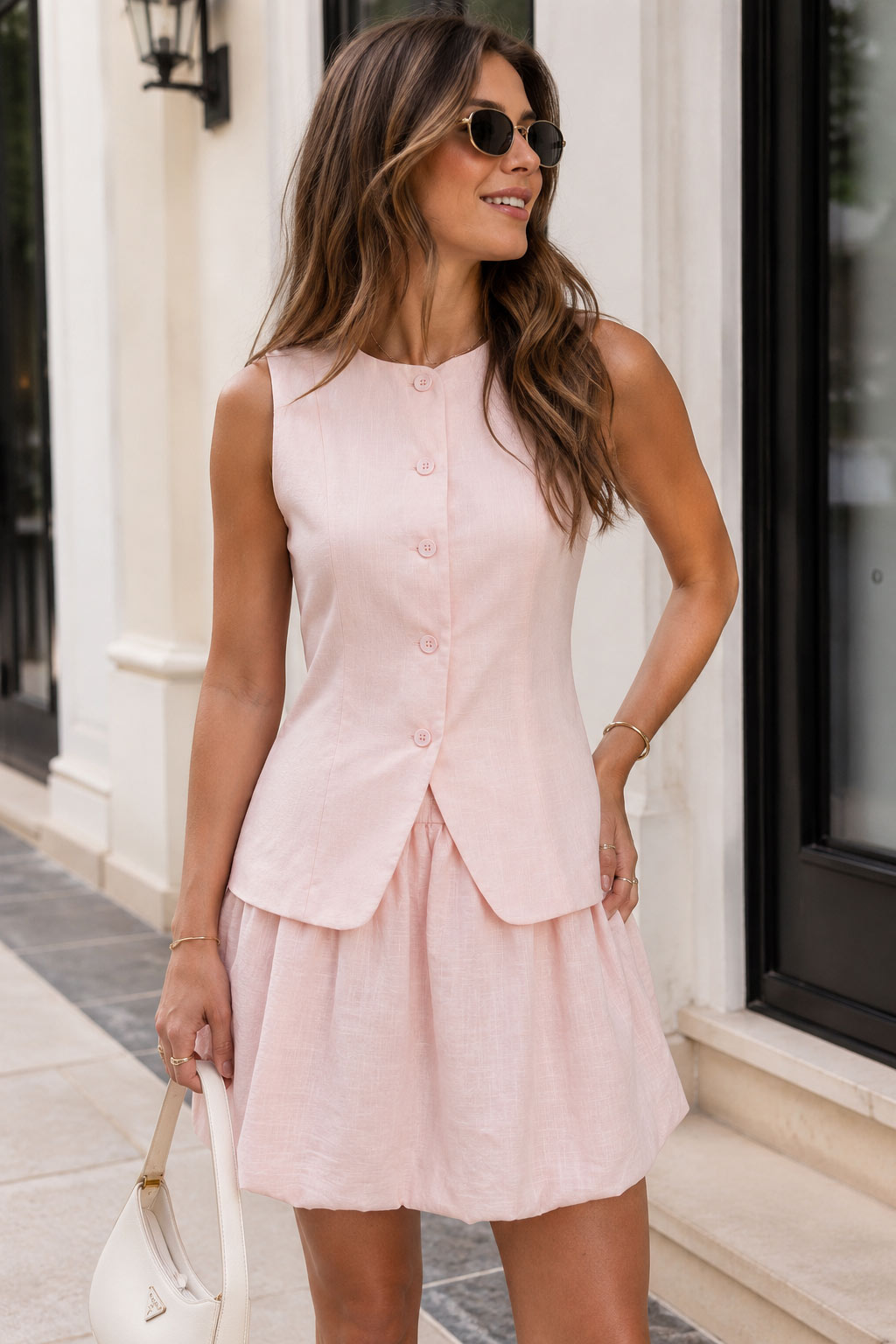
Rather than treating the matching set as the finished look, think about how your accessories influence its direction. A crossbody bag and ballet flats keep the outfit practical for shopping and walking between cafés, while a structured handbag and simple jewellery make the same set feel slightly more refined for afternoon drinks.
Let One Distinctive Piece Lead the Outfit
Creative neighborhoods, gallery visits, museums, and independent cafés often call for an outfit that feels considered without becoming overly styled. On days like these, it helps to choose one garment that naturally becomes the visual focal point while allowing everything else to remain understated.
The Calista Embroidered Tie Front Blouse illustrates this approach perfectly. Its embroidered details provide texture and character, meaning tailored trousers, relaxed wide-leg pants, or a simple midi skirt can quietly support the outfit rather than compete with it.
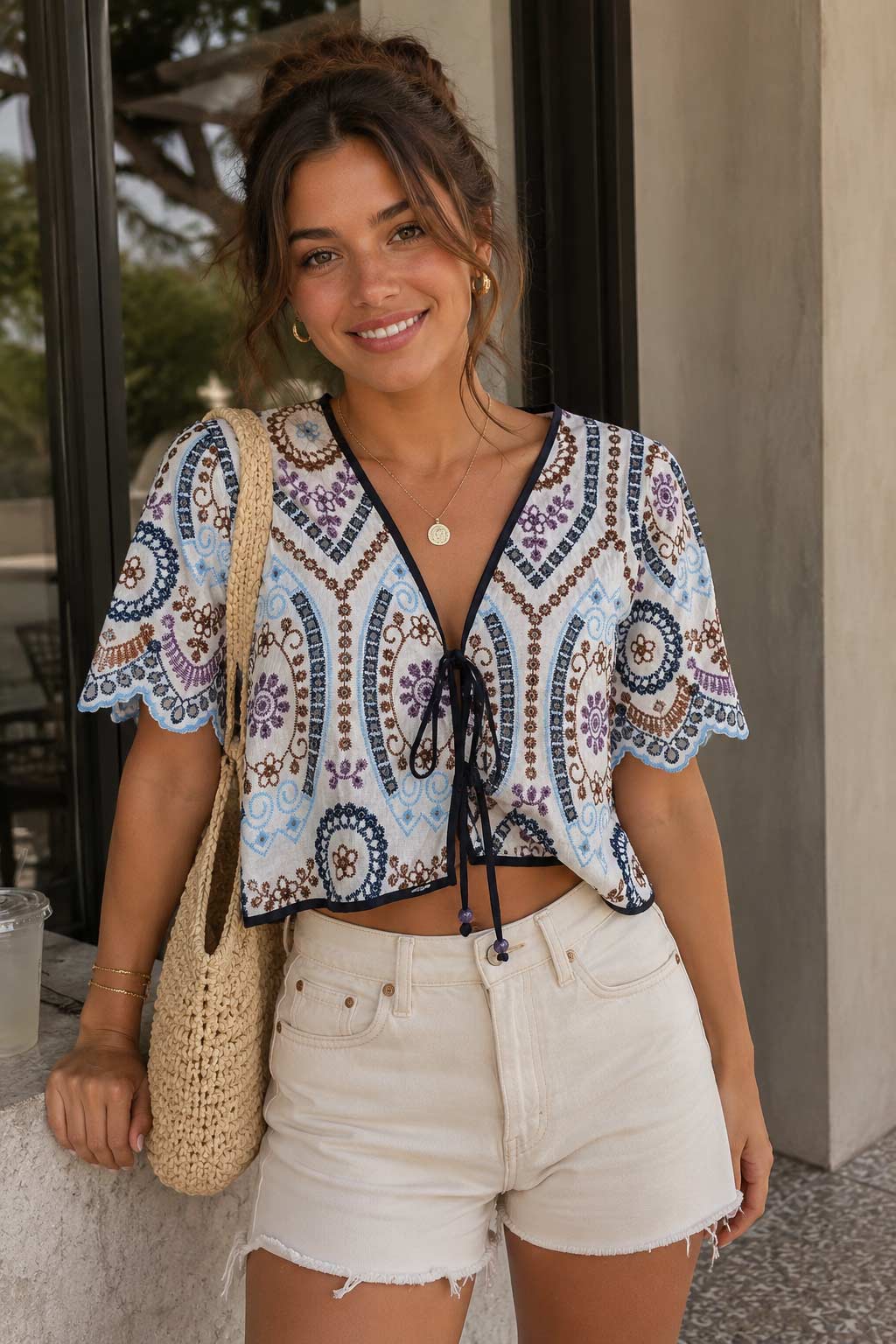
Building an outfit around one visually interesting piece offers a practical advantage during a walking-heavy day. Instead of relying on bold jewelry, statement shoes, and multiple accessories, the blouse already provides enough personality to make the outfit feel intentional. The result is a balanced look that remains comfortable while moving between exhibitions, cafés, bookstores, and local boutiques.
The same principle applies to textured knitwear. The Emmie Floral Crochet Top creates visual interest through its surface rather than bold color or dramatic shape.
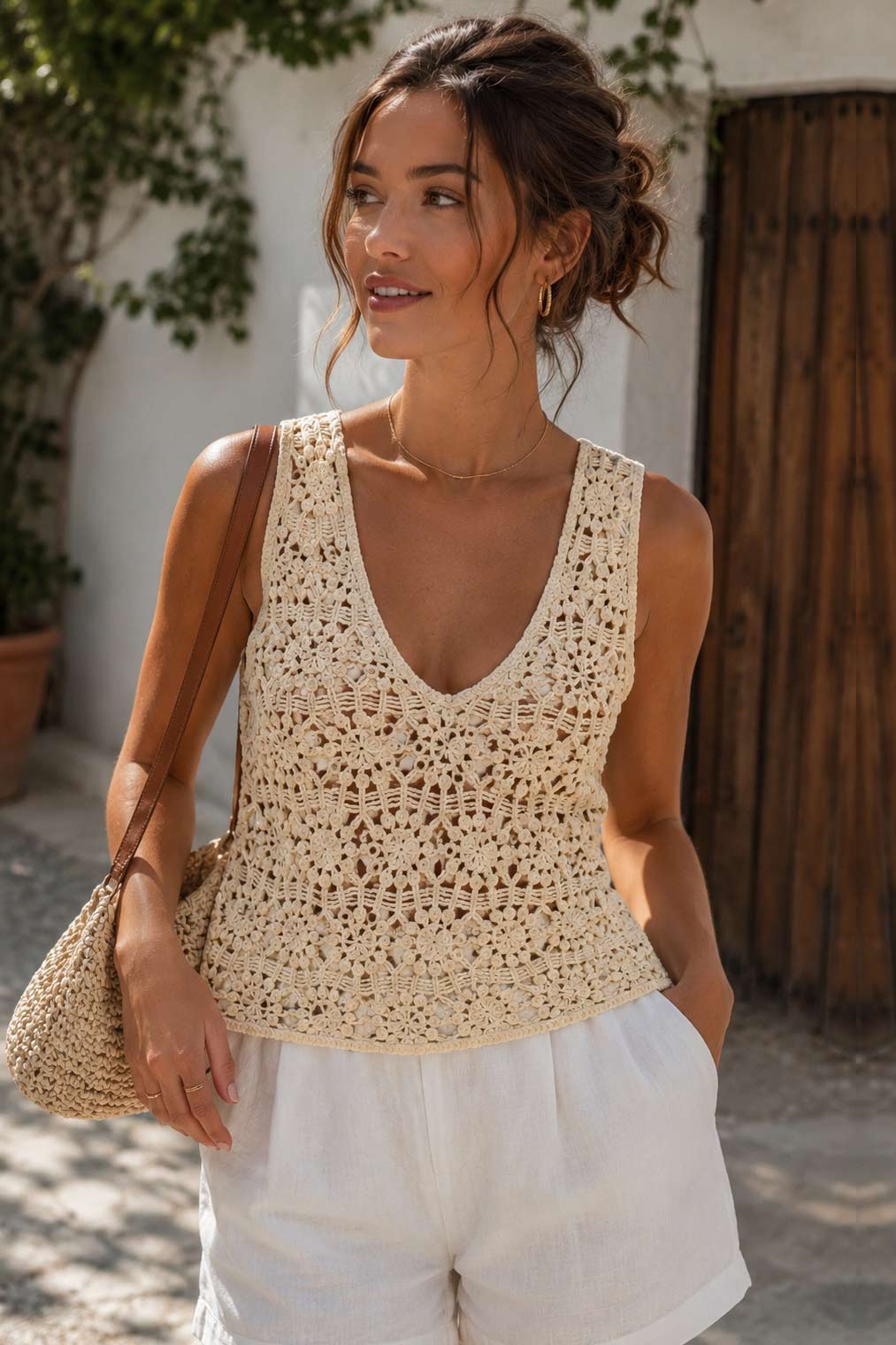
For a weekend market followed by lunch and an afternoon spent exploring the neighborhood, pairing a textured top with clean denim or relaxed trousers creates an outfit that feels thoughtfully assembled without becoming busy. Keeping the bottoms simple allows the crochet texture to stand out naturally, while understated accessories prevent the outfit from feeling overloaded with competing details.
Rather than thinking about adding more statement pieces, consider what already provides enough visual direction. One distinctive garment often creates a stronger city outfit than several attention-grabbing elements competing for focus.
One-Piece Dressing for Walking-Heavy Days
Some city days involve very few pauses. You may spend hours walking between neighborhoods, stopping for lunch, visiting local shops, and continuing on to parks or museums. On these days, reducing styling decisions before you leave home can be just as valuable as choosing comfortable footwear.
The Twist Bodice Gingham Dress demonstrates why dresses continue to be one of the simplest solutions for full-day dressing. Because the silhouette is already complete, the morning routine becomes easier, leaving only footwear, a bag, and light accessories to coordinate.
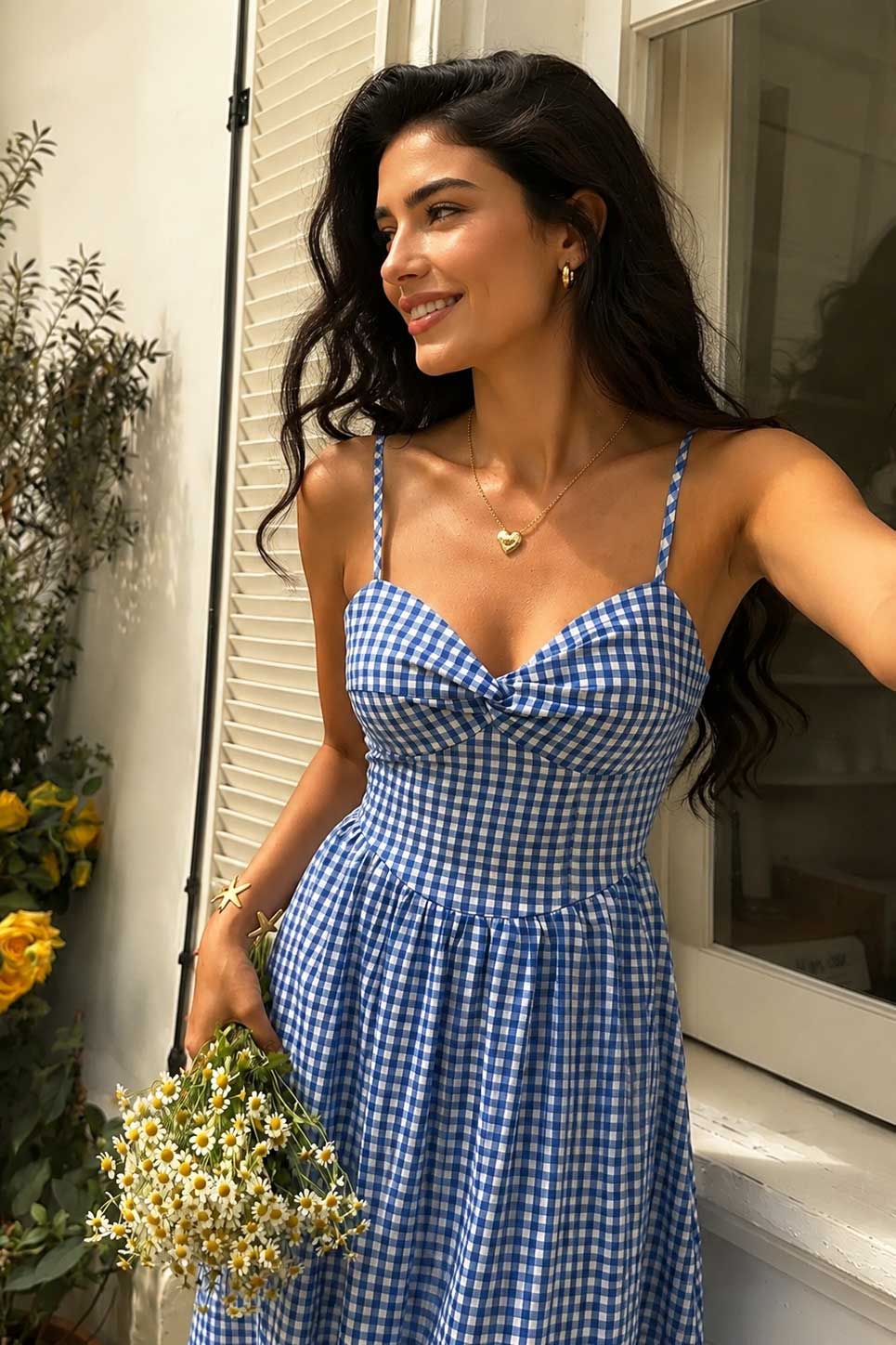
The gingham pattern gives the outfit a clear visual identity without requiring layered styling or bold accessories. For walking-heavy days, this allows practical shoes to become the priority without making the outfit feel unfinished. Ballet flats, refined sneakers, or supportive flat sandals can comfortably carry the look through lunch, shopping, and several hours of exploring.
A different approach comes from the Light Blue Denim Midaxi Dress, which uses fabric rather than pattern to create structure.
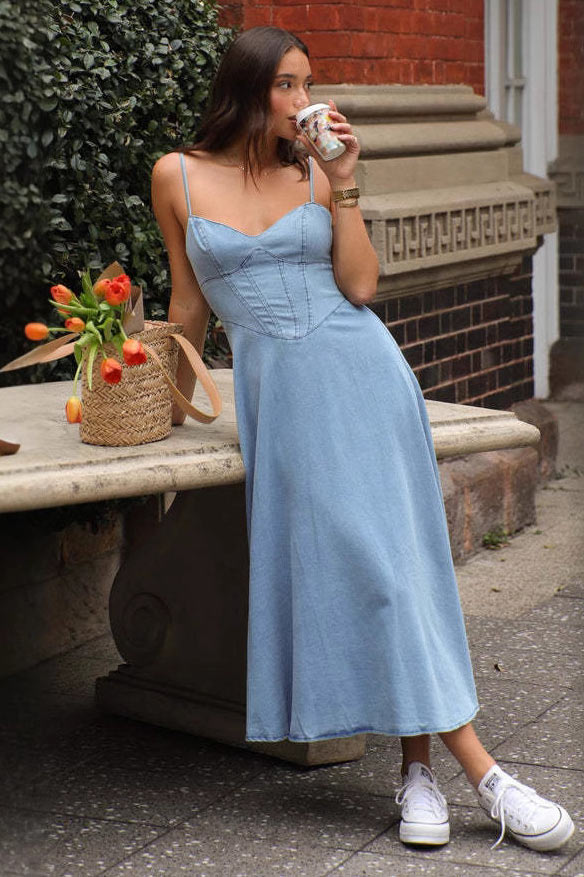
Denim is already familiar as an everyday fabric, so using it in a longer dress creates definition without feeling formal. The structured textile naturally holds its shape throughout the day, making it particularly useful when your plans involve extended walking, lunch, museums, and afternoon shopping. A crossbody bag and supportive loafers keep the outfit practical while maintaining the clean lines that make a denim dress feel polished.
Comparing these two approaches highlights an important styling decision. Pattern creates visual direction immediately, while structured fabric provides shape and definition more subtly. Neither is inherently better—the right choice depends on whether you want the pattern or the silhouette to become the outfit's defining feature.
When a Dress Needs More Visual Detail
Not every social city day requires a coordinated set. Sometimes a single dress offers enough presence while remaining easy to wear across brunch, shopping, and meeting friends later in the afternoon.
The Adara Embroidered Textured Mini Dress demonstrates how surface texture creates interest in a different way than printed fabric.
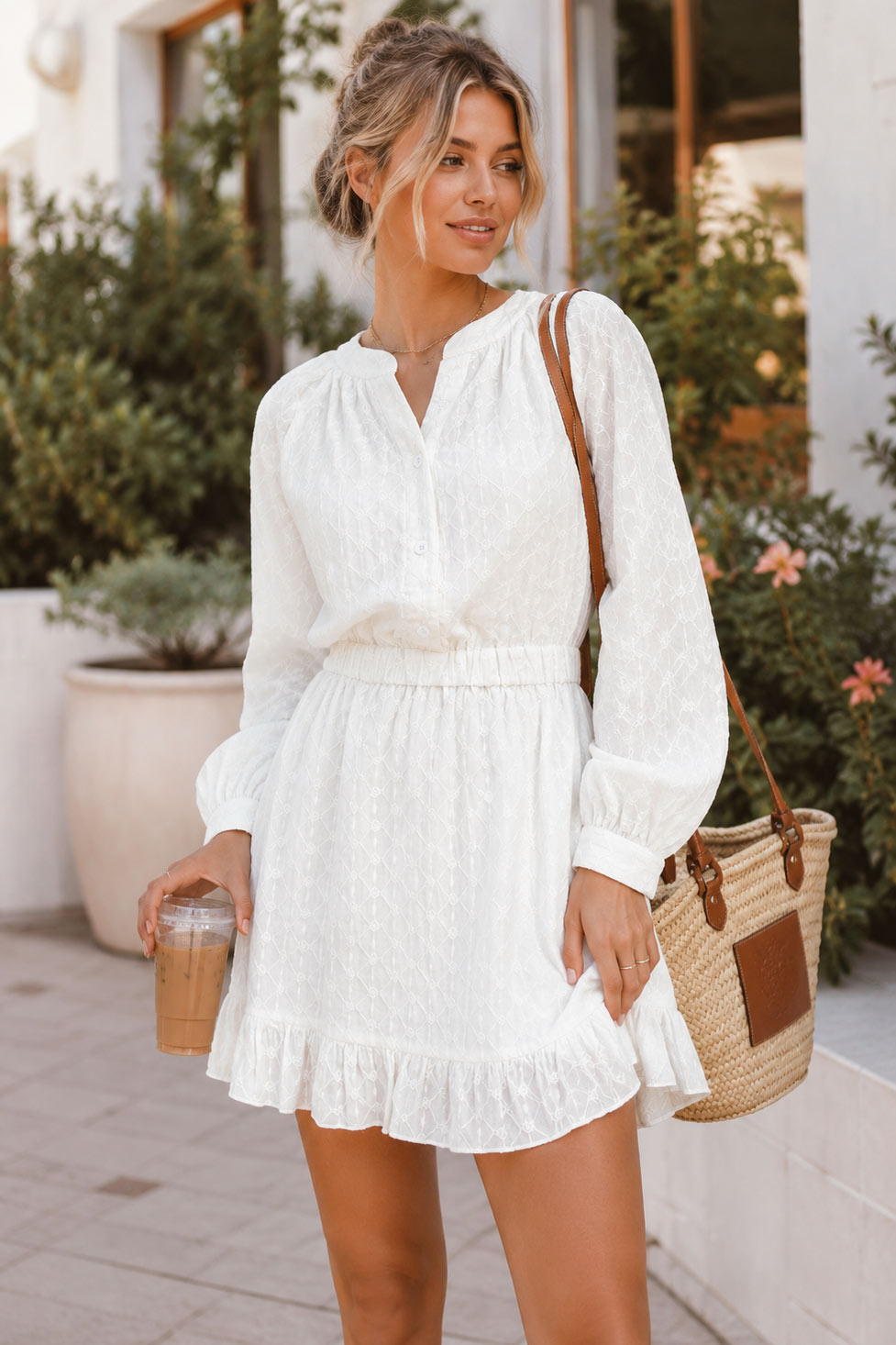
Compared with the structured visual rhythm of the Twist Bodice Gingham Dress, Adara relies on embroidery and texture to create depth. This makes it particularly effective for social city plans where the outfit benefits from looking considered without depending on bold accessories. The textured surface naturally catches the eye, allowing shoes, bags, and jewelry to remain understated.
This comparison also illustrates two useful dress strategies. Pattern provides immediate visual identity, while texture rewards a closer look and creates a quieter kind of sophistication. Choosing between them depends less on fashion trends and more on the atmosphere of the day ahead.
When Afternoon Plans Continue Into Evening
Some of the most enjoyable city days don't end where you expected. A late lunch turns into drinks, someone suggests dinner, or an afternoon meeting finishes earlier than planned. Instead of planning a complete outfit change, begin with clothing that can shift direction through small styling adjustments.
The Alessia Tailored Black Vest Set is an excellent example of this approach.
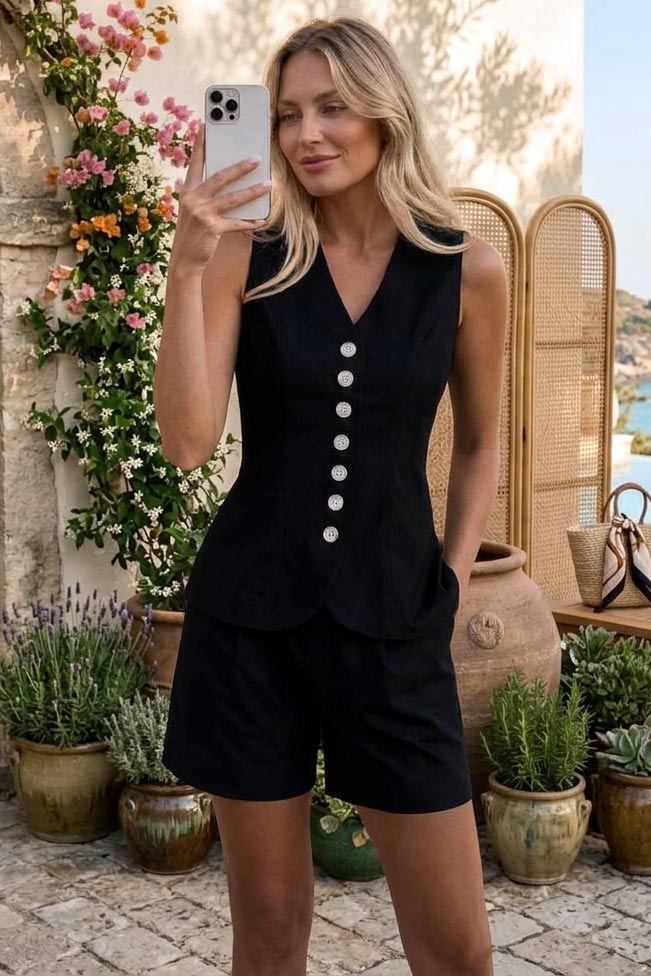
The tailored silhouette provides enough structure for daytime appointments while the darker colour palette naturally feels appropriate as evening approaches. During the day, comfortable flats and a medium-sized handbag keep the outfit relaxed. Later, switching to a smaller shoulder bag, adding simple jewelry, or changing into a low block heel subtly changes the mood without replacing the entire outfit.
This is where coordinated tailoring becomes especially valuable. Unlike dresses designed specifically for evening events, a vest set adapts to changing plans through accessories rather than relying on a dramatic transformation. The clothing remains the same—the styling simply responds to the next destination.
Dress, Matching Set, or Separates?
There isn't one outfit system that's right for every city day. The best choice depends on how your plans are likely to develop.
Choose a dress when you want to reduce morning decisions and create a complete outfit quickly. Dresses work particularly well for social itineraries that include lunch, shopping, cafés, or cultural activities because accessories can easily adjust the overall level of polish. The trade-off is that adapting to significant weather changes can sometimes require more planning.
Choose a matching set when your day moves between several environments. Coordinated pieces create visual consistency while offering more flexibility than a single dress. Separating the pieces or adding a layer makes matching sets particularly useful for appointments, lunches, and city days that continue into the evening.
Choose separates when your day involves changing temperatures or when one distinctive garment can provide enough visual direction for the outfit. A detailed blouse or textured top paired with quieter supporting pieces gives you greater control over proportion while allowing individual garments to respond to different situations throughout the day.
Rather than searching for one universally "correct" option, think about which outfit system best supports the structure of your day. The goal isn't simply looking put together—it's staying comfortable, adaptable, and appropriately dressed from your first stop to your last.
The Five Jobs of a Good City Outfit
A well-planned outfit does more than look polished when you leave home. It should continue supporting your plans as the day evolves. Whether you're crossing the city for appointments or spending hours exploring different neighborhoods, the most successful outfits share five practical qualities.
1. It Moves With You
Walking is part of almost every city itinerary. Even if you're using public transport or rideshares, you'll likely spend more time on your feet than expected. An outfit should allow comfortable movement when walking several blocks, climbing stairs, browsing shops, or sitting through a long lunch without constantly needing adjustment.
2. It Adapts to Different Environments
A single day may include outdoor streets, air-conditioned cafés, museums, restaurants, and evening terraces. Clothing that comfortably transitions between these environments helps you stay focused on your plans rather than your outfit.
3. It Holds Its Shape
Some garments require frequent straightening or repositioning throughout the day. Choosing fabrics and silhouettes that naturally maintain their shape creates a more polished appearance from morning until evening with less effort.
4. It Carries the Day
The outfit should support the length of your itinerary, not just the first destination. Comfortable footwear, a practical bag, and clothing suited to several hours away from home are just as important as the garments themselves.
5. It Can Change Direction
One of the biggest advantages of thoughtful city dressing is flexibility. If lunch turns into afternoon drinks or someone suggests dinner, your outfit should already have the foundation to make that transition. Often, a different bag, a lightweight layer, or a few simple accessories are all that's needed to shift the overall look.
Thinking about these five jobs before getting dressed encourages better decisions than simply choosing clothes that suit the first stop on your calendar.
Accessories That Help a City Outfit Last All Day
Garments may define the overall outfit, but accessories often determine whether it remains practical from morning until evening. The right shoes, bag, and layers work together to support movement, comfort, and changing plans throughout the day.
Choose Shoes for the Itinerary
Instead of choosing footwear based only on appearance, consider how much walking your schedule actually includes. A lunch reservation may involve several kilometres of walking before and after, while a museum visit often means standing for extended periods.
Refined sneakers, loafers, ballet flats, and supportive flat sandals are excellent choices for walking-heavy days because they provide stability without making the outfit feel overly casual. If your itinerary involves less walking and continues into dinner, low block heels can add polish while remaining more comfortable than higher heels over several hours.
The goal isn't to wear sneakers for every city outfit. It's to match your footwear to the way you'll realistically spend the day.
Select a Bag That Supports Your Plans
Bag choice influences both function and the overall direction of an outfit. A compact shoulder bag may look elegant at dinner but quickly becomes limiting if you need to carry sunglasses, a light layer, a water bottle, or purchases from local shops.
For walking-heavy days, a crossbody bag distributes weight comfortably while keeping your hands free. Structured medium-sized handbags work well for appointments, lunches, and more polished daytime plans, while totes make sense when shopping is one of the day's main activities.
If you expect your plans to continue into the evening, consider carrying a bag that feels equally appropriate during the day and after dark. Choosing one adaptable bag often eliminates the need to return home for a complete accessory change.
Layer With Purpose
Even during warmer months, city temperatures can change considerably throughout the day. Morning commutes may feel cool, restaurants and galleries are often heavily air-conditioned, and evenings frequently become more comfortable after sunset.
A lightweight blazer, relaxed overshirt, fine-knit cardigan, or unstructured jacket adds flexibility without overwhelming the outfit. More importantly, your layer should belong visually with the clothing underneath rather than feeling like an emergency addition.
When layers, shoes, and bags complement one another, the outfit remains cohesive from morning appointments through evening plans instead of feeling like several different looks assembled throughout the day.
When the Day Keeps Going
Some of the best city experiences are unplanned. A quick coffee becomes a long conversation. Shopping leads to an invitation for drinks. A gallery visit ends with dinner at a nearby restaurant. Rather than trying to predict every possibility, build your outfit around flexibility.
This is where coordinated pieces become particularly valuable. The Alessia Tailored Black Vest Set, for example, already provides a structured foundation. As the day progresses, small styling changes can naturally shift its direction. Swapping a roomy daytime bag for a smaller shoulder bag, adding statement earrings, removing a lightweight layer, or changing into a low heel creates an evening-ready look without requiring a complete outfit change.
The same principle applies to dresses and separates. Accessories should refine an outfit rather than completely transform it. If a look only works after changing nearly every element, it probably wasn't the right choice for an open-ended city day in the first place.
Common Mistakes & A Simple Decision Framework
Many city outfits stop working halfway through the day because they're chosen for only one destination instead of the entire itinerary.
Common mistakes include:
- Dressing only for the morning appointment and forgetting everything that comes after.
- Underestimating how much walking the day will involve.
- Choosing a bag that's too small for several hours away from home.
- Wearing garments that need constant adjustment.
- Combining too many statement pieces in one outfit.
- Ignoring indoor and outdoor temperature differences.
- Selecting shoes based only on appearance.
- Choosing clothing that's either too casual or too formal for a day with mixed activities.
A simple decision framework can prevent most of these problems.
- Appointment followed by lunch? Start with relaxed tailoring or a coordinated set.
- Mostly walking? Prioritize comfortable footwear, stable silhouettes, and a practical bag.
- Museums, galleries, or creative neighborhoods? Let one distinctive garment become the focal point.
- A social afternoon? Choose a dress or matching set that feels complete with minimal styling.
- No fixed ending? Build the outfit around adaptable pieces that respond well to changing accessories.
- Dinner is a possibility? Begin with enough structure that the outfit naturally transitions into the evening.
A City Wardrobe Is Built Around Repeated Routes
One of the easiest ways to improve your everyday style is to stop thinking about individual outfits and start thinking about the routes you take most often. While every day looks slightly different, most city schedules follow familiar patterns. You may commute across town, meet a client, spend an hour shopping, enjoy lunch, visit a gallery, or meet friends after work. Those combinations repeat far more often than we realize.
Instead of building a wardrobe around isolated occasions, build it around those recurring patterns. When your clothing reflects the rhythm of your real life, getting dressed becomes more consistent because every piece has multiple purposes rather than serving only one event.
That's one reason coordinated dressing has become such a practical solution for modern city life. Matching sets can be worn together when your schedule calls for a polished look, while each piece can also be styled separately on quieter days. Likewise, dresses that provide structure without feeling overly formal often become reliable choices for afternoons filled with walking, lunch, and spontaneous plans.
Tailored separates deserve a place in the same conversation. They no longer belong exclusively to traditional workwear. Relaxed tailoring offers visual definition that feels appropriate for appointments, lunches, cultural outings, and evenings that develop naturally after the workday ends.
If your wardrobe consistently supports the places you actually go, you'll spend less time wondering what to wear and more time enjoying the day itself.
Conclusion
Dressing for a full day in the city isn't about predicting every stop on your itinerary. It's about understanding the overall shape of the day and choosing clothing that responds to it.
A reliable silhouette provides the foundation. Comfortable accessories support movement. Thoughtful coordination allows an outfit to adapt as your surroundings change, whether that means moving from appointments to lunch, from shopping to a museum, or from afternoon conversations to dinner later in the evening.
Sometimes that means choosing a tailored matching set because your day begins with structured plans. Other times, a dress simplifies a walking-heavy schedule, while carefully chosen separates allow one distinctive piece to define the entire outfit. There isn't one perfect formula - only the one that best supports how your day is likely to unfold.
The strongest city wardrobes are built around flexibility rather than excess. When every piece has a clear purpose and works comfortably alongside the rest of your wardrobe, getting dressed becomes less about planning for every possible destination and more about being prepared for wherever the day leads.
Dressing for the city isn't about owning more clothes. It's about understanding which outfit systems support the way you actually spend your days. When every piece works with the next destination instead of only the first one, getting dressed becomes simpler, more practical, and far more enjoyable.
Looks that move with the day.
About the Author
Written by Laney, Style Editor at Awesome Jade. Laney creates practical styling guides focused on vacation outfits, matching sets, everyday dressing, and versatile wardrobes that help women dress confidently for real plans.
Frequently Asked Questions
What should I wear for a full day in the city?
Choose an outfit that balances comfort, movement, and adaptability. Matching sets, structured dresses, and thoughtfully styled separates all work well when your plans include walking, lunch, shopping, and possible evening activities.
What is the best outfit for a day with a lot of walking?
A walking-heavy day is best supported by stable silhouettes, comfortable footwear, and a practical crossbody or medium-sized bag. Dresses, relaxed tailoring, and simple separates all work well when paired with supportive shoes.
Can I wear a dress for a full day of city plans?
Yes. Dresses reduce styling decisions while providing a complete outfit. Choosing a silhouette that allows comfortable movement and pairing it with practical footwear makes a dress an excellent option for multi-stop city days.
Are matching sets practical for city dressing?
Absolutely. Matching sets create visual coordination while offering more flexibility than a single dress. They can easily transition between appointments, lunch, shopping, and evening plans by changing accessories or layering pieces.
How do I dress for lunch, shopping, and dinner without changing outfits?
Start with an adaptable foundation such as a tailored matching set or a structured dress. Then use accessories, lightweight layers, and footwear to adjust the overall level of polish as the day progresses.
What shoes work best for a full day in the city?
The best shoes depend on your itinerary. Refined sneakers, loafers, ballet flats, and supportive sandals suit walking-heavy days, while low block heels work well when your plans involve less walking and continue into the evening.
What bag should I carry for a long city day?
Choose a bag that supports your schedule rather than only your outfit. Crossbody bags work well for movement, structured handbags suit appointments and lunches, while totes are useful when shopping is a major part of the day.
How can I make a daytime outfit work for evening plans?
Build your outfit around structured garments that already feel polished. Updating your jewelry, switching to a smaller bag, changing shoes when practical, or removing a layer can naturally shift the outfit toward an evening setting.